

Welcoming a new puppy into your home is an exciting experience, but it requires a structured approach to ensure they grow into a well-behaved dog. A puppy training timeline is essential for guiding your pet’s development, teaching them important skills, and strengthening your bond.
By following a dog obedience training plan, you can help your puppy learn crucial commands and behaviors month by month. This not only enhances their obedience but also contributes to a happier, healthier relationship between you and your pet.
Key Takeaways
- Understand the importance of a structured puppy training plan.
- Learn what to teach your puppy each month.
- Discover how a puppy training timeline can improve dog obedience.
- Find out how to strengthen your bond with your puppy through training.
- Explore the benefits of following a dog obedience training plan.
Preparing for Your Puppy: Before Bringing Them Home
Preparing your home for a puppy is crucial for a smooth transition for both you and your new pet. It’s not just about getting the right supplies; it’s about creating an environment that’s safe and welcoming for your new furry friend.
Setting Up Your Home for Success
Before your puppy arrives, your home needs to be puppy-proofed. This involves removing hazardous items and securing any loose wires or toxic substances.
Puppy-Proofing Essentials
- Secure toxic substances and cleaning supplies
- Remove hazardous items like sharp objects and electrical cords
- Block off areas you don’t want your puppy to access
Creating a Safe Space
Designate a quiet area where your puppy can rest without being disturbed. This could be a crate with comfortable bedding, providing a sense of security and helping with crate training puppies.
Gathering Essential Training Supplies
Having the right supplies is vital for effective puppy training. Essential items include:
| Supply | Purpose |
|---|---|
| Crates | For crate training and providing a safe space |
| Leash and collar | For walking and identification |
| Toys and chews | For mental stimulation and teething relief |
Establishing House Rules
Consistency is key when it comes to puppy training. Establishing clear house rules helps your puppy understand what’s expected of them. This includes rules about where they can sleep, eat, and play.
By following these puppy training tips and preparing your home, you’ll be well on your way to raising a well-behaved and happy puppy.
Month 1 (8-12 Weeks): Building Trust and Basic Skills
The first month with your new puppy is an exciting time, filled with opportunities to build trust and basic skills. During this period, your puppy will absorb a lot of information, and with the right approach, you can lay a strong foundation for their future behavior.
Potty Training Fundamentals
Potty training is one of the first challenges you’ll face with your new puppy. It’s essential to start early and be consistent.
Establishing a Consistent Schedule
Take your puppy outside to the same spot each time to create a routine. This should be done immediately after meals, naps, and playtime. Consistency is key to successful potty training.
Accident Management
Accidents will happen, but it’s crucial not to scold your puppy. Instead, calmly say “outside” and quickly take them to the designated potty area. Rewarding successful uses of the potty area with treats and praise will reinforce good behavior.
Crate Training Introduction
Crate training is a valuable tool for potty training and for providing your puppy with a safe space. Introduce the crate gradually, starting with short periods and increasing the duration.
Name Recognition
Teaching your puppy to recognize their name is a fundamental skill. Use positive reinforcement training by saying their name and rewarding them with treats when they respond.
Gentle Handling and Touch Desensitization
Gentle handling helps your puppy become comfortable with being touched. Start with light touch and gradually increase the intensity. This helps desensitize them to various types of touch, making vet visits and grooming easier.
By focusing on these areas during the first month, you’ll establish a strong foundation for your puppy’s development and set the stage for further training.
Essential Puppy Training Techniques for Month 2 (12-16 Weeks)
During the 12-16 week period, puppies are most receptive to learning essential skills that will shape their behavior for the rest of their lives. This month is crucial for introducing new commands, improving leash walking, and enhancing socialization skills.
Basic Commands: Sit, Down, and Stay
Teaching basic commands like “sit,” “down,” and “stay” is fundamental. Use positive reinforcement techniques, such as treats and praise, to encourage learning. For example, to teach “sit,” hold a treat above your puppy’s head and move it backwards towards their tail. As they follow the treat with their nose, their bottom will lower into a sitting position.
Leash Walking Basics
Leash walking is another critical skill. Start by letting your puppy get accustomed to wearing a harness, then gradually introduce the leash. Practice walking in a quiet area with minimal distractions, rewarding your puppy for walking beside you.
Socialization with People and Other Dogs
Socialization is key during this period. Expose your puppy to various environments, people, and other dogs to help them become confident and calm in new situations.
Safe Exposure to New Experiences
Ensure that new experiences are positive. Avoid overwhelming your puppy and start with small, manageable steps.
Puppy Socialization Checklist
- Introduce your puppy to new people, including men, women, and children.
- Arrange meetings with other vaccinated puppies and friendly adult dogs.
- Expose your puppy to different environments, such as parks and pet stores.
Preventing Resource Guarding
Resource guarding can be prevented by teaching your puppy that sharing is rewarding. Practice trading treats or toys for something of equal or greater value, demonstrating that giving up a resource can result in a positive outcome.
Month 3 (16-20 Weeks): Building Reliability
As your puppy grows into their third month, it’s time to focus on building reliability in their training. At this stage, your puppy should have a basic understanding of simple commands, and now it’s crucial to reinforce these skills in various contexts.
Strengthening Basic Commands
Continue to practice positive reinforcement training techniques to strengthen your puppy’s understanding of basic commands like “sit,” “down,” and “stay.” Make sure to vary the environment and add distractions gradually to help your puppy generalize these commands.
Introduction to “Come” Command
Month three is an ideal time to introduce the “come” command, a crucial skill for off-leash walks and emergency situations. Start in a controlled environment with minimal distractions and use positive reinforcement when your puppy responds correctly.
Recall Games and Exercises
Engage your puppy in recall games that challenge their response to the “come” command. Hide-and-seek is an excellent game that not only reinforces the command but also strengthens your bond with your puppy. Gradually increase the distance and distractions to make the exercises more challenging.
Impulse Control Exercises
Impulse control is vital for a well-behaved puppy. Exercises like “leave it” and “wait” help your puppy learn self-control. Start with simple exercises where your puppy has to resist the temptation of a treat, and gradually increase the difficulty.
Handling Distractions
As your puppy becomes more reliable with basic commands, it’s essential to introduce various distractions to simulate real-life scenarios. This could include other dogs, people, and loud noises. Practice commands in these distracting environments to build your puppy’s focus and reliability.
By focusing on these areas, you’ll be well on your way to raising a well-behaved and obedient puppy. Consider enrolling in puppy training classes to get professional guidance and socialization opportunities for your puppy.
Month 4 (20-24 Weeks): Advanced Skills and Behaviors
As your puppy grows into their fourth month, it’s time to focus on advanced training techniques. At this stage, your puppy is more receptive to complex commands and behaviors, laying the groundwork for a well-behaved adult dog.
Loose-Leash Walking Refinement
By now, your puppy should be familiar with leash walking. It’s time to refine this skill by practicing loose-leash walking. Consistency is key; ensure that everyone walking your puppy uses the same commands and techniques. You can achieve loose-leash walking by stopping whenever your puppy pulls ahead, and rewarding them with treats when they walk beside you.
Leave It and Drop It Commands
The “leave it” and “drop it” commands are crucial for your puppy’s safety. These commands teach your puppy to leave an object alone or drop it on command. Start by offering a treat, then covering it with your hand and saying “leave it.” When your puppy ignores the treat, reward them with a different treat. For “drop it,” begin by having your puppy hold a toy, then offering a treat in exchange for the toy.
Safety Applications
These commands have significant safety applications. For instance, if your puppy picks up something harmful, a strong “drop it” command can prevent potential harm. Regular practice in various situations will help reinforce these commands.
Introduction to Stay Duration
Building on the “stay” command introduced earlier, it’s time to increase the duration. Gradually increase the time you’re out of sight or the distance between you and your puppy while they’re in a “stay” position. This will help improve their self-control and reliability.
Addressing Adolescent Behaviors
Puppies often exhibit challenging behaviors during their fourth month, such as chewing or testing boundaries. It’s essential to address these behaviors promptly. Redirecting their energy towards appropriate chew toys and reinforcing good behavior can help mitigate these issues.
| Command | Purpose | Tips for Training |
|---|---|---|
| Loose-Leash Walking | Refine walking on a leash | Stop when puppy pulls, reward when they walk beside you |
| Leave It/Drop It | Safety and obedience | Use treats to encourage leaving or dropping objects |
| Stay Duration | Increase self-control | Gradually increase time and distance |
Month 5-6 (24-32 Weeks): Reinforcing Training Through Adolescence
Between 5 to 6 months, your puppy enters a critical phase of development that demands reinforced training and socialization. During this period, your puppy’s behavior may change due to the onset of adolescence, often referred to as the “teenage rebellion phase.” It’s essential to remain patient and consistent in your training efforts.
Dealing with Teenage Rebellion Phase
The adolescent phase can bring about challenging behaviors as your puppy tests boundaries and pushes limits. To manage this, maintain a consistent training routine and ensure all family members are on the same page regarding rules and boundaries. It’s also crucial to continue positive reinforcement techniques, rewarding good behavior while calmly correcting undesired actions.
Proofing Commands in Different Environments
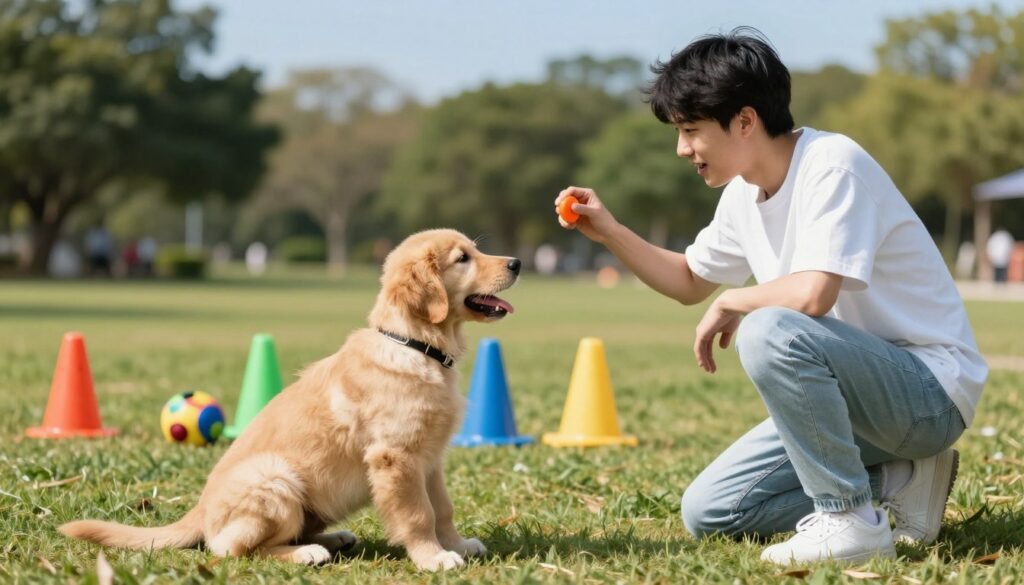
To ensure your puppy responds reliably to commands, practice them in various environments and contexts. This helps to generalize their understanding of the commands. For example, practice “sit” and “stay” in different rooms, outdoors, and in areas with distractions. This will help your puppy understand that commands are universal, not just specific to one location.
Advanced Socialization Challenges
Advanced socialization is critical during this phase. Expose your puppy to new people, dogs, and environments to help them become confident and calm in new situations. Consider enrolling them in puppy socialization classes or arranging playdates with other dogs. This exposure will help them develop good social skills and reduce the risk of anxiety or aggression issues.
Introduction to Tricks and Mental Stimulation
Introducing tricks and mental stimulation activities can help channel your puppy’s energy positively and strengthen your bond. Start with simple tricks like “shake” or “roll over,” and gradually move to more complex ones. Puzzle toys and brain games are excellent for mental stimulation, challenging your puppy to figure out how to get a treat out.
Puzzle Toys and Brain Games
Puzzle toys and brain games are designed to challenge your puppy’s problem-solving skills, keeping them engaged and stimulated. Examples include treat-dispensing toys and interactive games that require your puppy to work for a reward. These activities not only entertain but also reduce the likelihood of destructive behavior by keeping your puppy’s mind occupied.
By addressing the challenges of adolescence with consistent training, advanced socialization, and mental stimulation, you can help your puppy navigate this critical phase and develop into a well-behaved and confident adult dog.
Month 7-8 (32-40 Weeks): Fine-Tuning and Problem Solving
As your puppy grows into a young adult, it’s essential to fine-tune their training and address any emerging behavior issues. At this stage, your puppy is likely to test boundaries and push limits, making consistent training crucial.
Addressing Specific Behavior Issues
If you’ve noticed any undesirable behaviors, such as chewing, digging, or barking, it’s time to address them. Consistency and positive reinforcement are key to correcting these issues. For example, if your puppy is chewing on furniture, redirect them to appropriate chew toys and praise them for using the correct items.
Advanced Obedience Work
By now, your puppy should have a solid grasp of basic commands. It’s time to advance their obedience training with more complex exercises, such as longer duration stays and more intricate command sequences. Practice regularly to reinforce what they’ve learned.
Off-Leash Reliability Training
Off-leash training is a significant milestone. Start by practicing in controlled environments, such as enclosed areas or quiet parks, to minimize distractions. Gradually increase the distance between you and your puppy while maintaining their focus.
Controlled Environment Practice
Begin with short distances and gradually increase the length as your puppy becomes more reliable. Use positive reinforcement techniques, such as treats and praise, to encourage good behavior.
Building Confidence in Challenging Situations
To build your puppy’s confidence, expose them to various challenging situations, such as new environments, people, and noises. Support and encouragement
By focusing on these areas, you’ll be able to fine-tune your puppy’s training and address any issues that arise, setting them up for a lifetime of good behavior and strong companionship.
Ongoing Training: Beyond the First Year
Ongoing training and mental stimulation are key to keeping your dog engaged and well-behaved throughout their life. As your dog matures, it’s essential to continue challenging them and reinforcing good behavior.
Maintaining Skills Through Adulthood
Regular practice and reinforcement of previously learned commands and behaviors are crucial. This can be achieved through regular training sessions and incorporating training into daily activities.
Advanced Training Options
Consider enrolling your dog in advanced obedience classes or specialty training that focuses on agility, scent work, or other dog sports.
Sport and Activity Opportunities
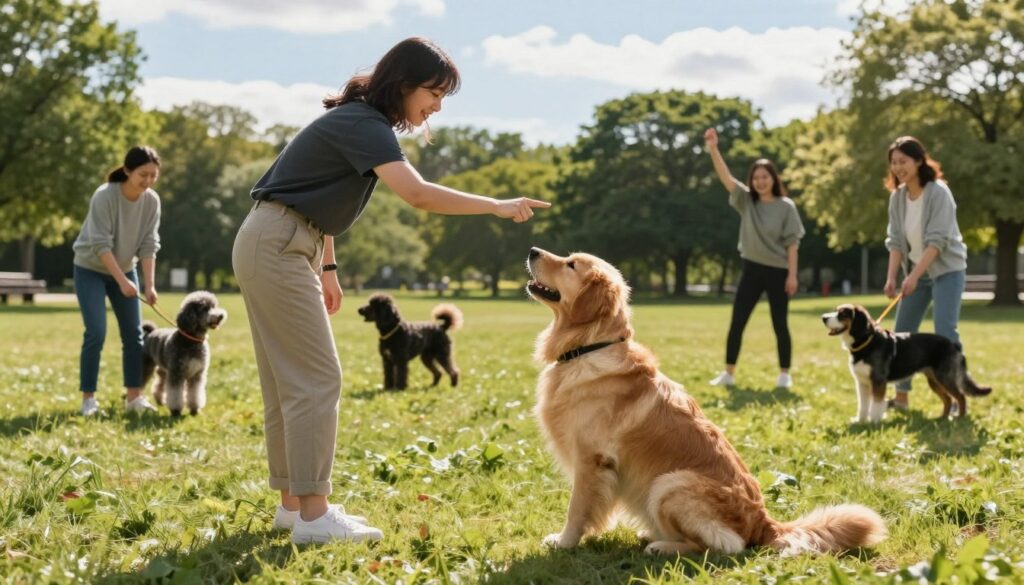
Engaging in dog sports such as agility, flyball, or dock diving can provide physical exercise and mental stimulation. These activities strengthen the bond between you and your dog and help maintain their physical and mental health.
Specialized Activities for Your Dog’s Personality
Tailor activities to your dog’s interests and abilities. For example, herding dogs may enjoy herding trials, while dogs with a strong prey drive might enjoy lure coursing.
Conclusion
Following a structured puppy training timeline is crucial for raising a well-behaved and obedient dog. By breaking down training into manageable monthly goals, you can ensure your puppy develops essential skills and behaviors.
As you’ve seen, each month brings new challenges and opportunities for growth. From basic obedience commands to advanced socialization techniques, a comprehensive training plan sets the stage for a strong bond between you and your puppy.
To reinforce your training efforts, consider these final puppy training tips: be patient, stay consistent, and reward good behavior. As you continue on your training journey, remember that every dog is unique, and adapting your approach to your puppy’s individual needs is key to success.
By committing to a structured training plan and staying engaged, you’ll be well on your way to raising a confident, well-adjusted companion that brings joy and love into your life.