

Understanding canine communication is crucial for any dog owner. Dogs primarily convey their emotions and needs through non-verbal cues, making it essential to decipher their body signals.
By interpreting these signals, you can better understand your dog’s emotions, needs, and intentions, ultimately strengthening your bond with your pet.
As we explore the various aspects of dog body language, you’ll gain insights into tail movements, ear positions, facial expressions, and more.
Key Takeaways
- Understand the importance of canine non-verbal cues.
- Learn to interpret your dog’s emotions and needs.
- Discover how to strengthen your bond with your dog.
- Explore the different aspects of dog body language.
- Gain insights into improving your relationship with your pet.
The Fundamentals of Canine Communication
Dogs primarily rely on non-verbal cues to convey their emotions and needs, making it essential for owners to understand these signals. Through a combination of body language and vocalizations, dogs can express a wide range of feelings.
Why Dogs Rely on Non-verbal Communication
Dogs use non-verbal communication because it is an effective way to convey their emotions and needs. This form of communication includes body language, vocalizations, and scent marking.
| Form of Communication | Description | Examples |
|---|---|---|
| Body Language | Postures and movements that convey emotions and intentions | Tail wagging, ear positions, facial expressions |
| Vocalizations | Sounds used to express emotions and needs | Barking, whining, growling |
| Scent Marking | Using scent to communicate with other dogs | Urine marking, feces, scent glands |
The Evolution of Dog-Human Communication
The evolution of dog-human communication has been shaped by thousands of years of coexistence. Dogs have adapted to human behavior, and humans have learned to understand canine cues, enhancing their bond.
Understanding Dog Body Language: A Complete Guide
Deciphering dog body language is crucial for understanding your canine companion’s emotional state. By gaining insight into how dogs communicate, you can foster a deeper and more meaningful relationship with your pet.
The Components of Canine Communication
Canine communication is multifaceted, involving various components such as body postures, facial expressions, tail movements, and ear positions. Each of these elements provides valuable information about a dog’s emotional state and intentions. For instance, a dog’s tail wagging pattern can indicate excitement, happiness, or even warning signs. Similarly, ear positions can signal a dog’s mood, ranging from relaxed to alert or fearful.
- Body Postures: Confident, fearful, or relaxed stances
- Facial Expressions: Mouth positions, eye contact, and pupil dilation
- Tail Movements: Wagging patterns and tail carriage
- Ear Positions: Forward, neutral, or back positions
How to Observe Your Dog’s Signals Holistically
Observing your dog’s signals holistically involves considering the context in which they are behaving and looking for patterns in their behavior. It’s essential to take into account the entire range of your dog’s body language, rather than focusing on isolated signals. For example, a dog that is wagging its tail might also be displaying a relaxed facial expression and an open posture, indicating happiness. However, if the same wagging tail is accompanied by a tense facial expression and a stiff posture, it could signal agitation or warning.
Individual Differences in Expression
Just like humans, dogs have unique personalities and ways of expressing themselves. Some dogs may be more expressive with their body language, while others may be more subtle. Understanding these individual differences is key to accurately interpreting your dog’s signals. By being attuned to your dog’s specific communication style, you can better respond to their needs and strengthen your bond.
Tail Movements and Positions
The tail is a significant aspect of dog body language, providing insights into a dog’s emotional well-being through its movements and carriage. A dog’s tail can convey a range of emotions, from happiness and excitement to fear and anxiety.
High vs. Low Tail Carriage
A dog’s tail carriage can indicate their confidence and emotional state. A high tail carriage often signifies confidence or excitement, while a low tail carriage may indicate fear or submission. Understanding these cues can help you better interact with your dog.
Decoding Different Wagging Patterns
The wagging pattern of a dog’s tail can also provide valuable information. A broad, sweeping wag may indicate excitement or friendliness, whereas a stiff, rapid wag could signal agitation or alertness. Paying attention to these patterns can enhance your understanding of your dog’s behavior.
Breed-Specific Tail Language
Different breeds have unique tail characteristics that affect their communication. For instance, curly-tailed breeds and dogs with docked or naturally bobbed tails have distinct ways of expressing themselves.
Curly-Tailed Breeds
Breeds like the Pug or Akita have curly tails that can make it harder to read their emotional state. However, the base of the tail and the way it’s carried can still provide clues.
Docked or Naturally Bobbed Tails
Dogs with docked or naturally short tails rely more on other body language cues, such as ear positions and facial expressions, to communicate. Observing these alternative signals is crucial for understanding their emotional state.
| Tail Carriage | Emotional State |
|---|---|
| High | Confidence, Excitement |
| Low | Fear, Submission |
“The way a dog wags its tail can tell you a lot about its mood and intentions. By paying attention to the speed, movement, and position of the tail, you can gain a deeper understanding of your dog’s emotional state.”
Ear Positions and Movements
The way a dog positions its ears can reveal its emotional state. Dogs use their ears to convey a range of emotions, and understanding these cues can help you better respond to your dog’s needs.
Forward, Neutral, and Back Positions
Ear positions can be categorized into three main types: forward, neutral, and back. Forward ears often indicate interest or excitement, while neutral ears suggest a relaxed state. Ears laid back can signify fear or submission.
- Forward ears: confidence, interest
- Neutral ears: relaxation, calmness
- Back ears: fear, submission
Ear Twitches and Subtle Movements
Besides the overall position, subtle ear movements can also provide insight into a dog’s mood. Ear twitches can indicate a heightened state of awareness or slight anxiety.
How Ear Shape Affects Communication
The shape and structure of a dog’s ears can influence their ability to communicate. For instance, dogs with erect ears may be able to convey their emotions more clearly than those with floppy ears.
By paying attention to your dog’s ear positions and movements, you can gain a deeper understanding of their emotional state and respond accordingly, strengthening your bond and improving communication.
Facial Expressions and Eye Contact
Facial expressions and eye contact are vital components of canine non-verbal communication. Dogs convey a range of emotions through their facial cues, making it essential for dog owners to understand these signals.
The Meaning Behind Different Gazes
A dog’s gaze can convey various messages, from affection and attention to fear or aggression. Direct eye contact can be a sign of confidence or a challenge, while avoiding eye contact may indicate submission or fear. Understanding the context of the gaze is crucial for accurate interpretation.
Mouth Positions: From Relaxed to Tense
The position and tension of a dog’s mouth can also indicate their emotional state. A relaxed dog typically has a loose, open mouth, while a tense dog may have a tight, closed mouth. Observing these subtle changes can help in understanding a dog’s feelings.
Pupil Dilation and Blinking Patterns
Pupil dilation and blinking patterns provide additional insights into a dog’s stress levels and emotional state. Dilated pupils can be a sign of excitement or stress, while slow blinking may indicate relaxation.
Whale Eye and Stress Signals
The “whale eye” phenomenon, where the whites of a dog’s eyes are visible, is often a sign of stress or anxiety. Recognizing this signal can help in addressing the dog’s discomfort.
Squinting and Relaxation
Squinting or soft eyes in dogs can be a sign of relaxation and contentment. This subtle cue can indicate that the dog feels comfortable in their environment.
By paying attention to these facial expressions and eye contact cues, dog owners can better understand their pet’s emotional state and respond appropriately, strengthening their bond and ensuring the dog’s well-being.
Body Postures and Stances
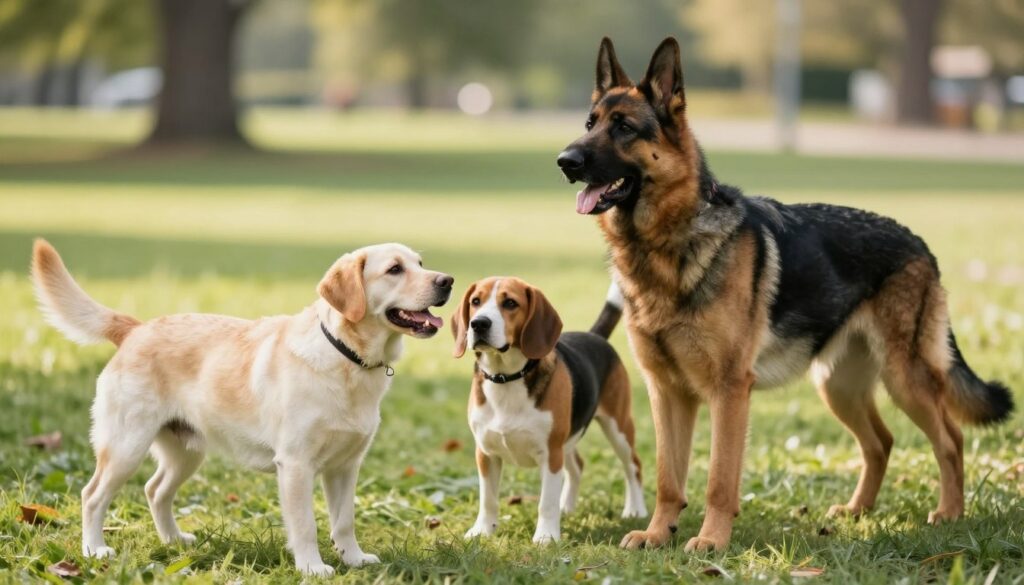
Body postures and stances are essential components of canine communication, conveying emotions and intentions. A dog’s posture can signal confidence, fear, or a readiness to engage in play, making it a crucial aspect of understanding dog body language.
Confident vs. Fearful Body Language
A confident dog typically stands tall with their weight evenly distributed on all four legs. In contrast, a fearful dog may cower, lowering their body and avoiding eye contact. Recognizing these postures can help you understand your dog’s emotional state and respond appropriately.
Play Bow and Other Social Invitations
The play bow, where a dog lowers their front legs and raises their hindquarters, is a universal canine signal inviting play. Other social invitations may include relaxed, open postures and wagging tails. These signals are crucial for initiating play and social interaction.
Weight Distribution as Communication
A dog’s weight distribution can also convey their intentions. For example, shifting weight onto the hind legs can indicate preparation for action, while leaning forward may signal interest or aggression. Understanding these subtle cues can enhance your communication with your dog.
Hackles and Body Tension
Raised hackles (the hair along a dog’s back) and body tension are significant indicators of a dog’s emotional state. While often associated with aggression, raised hackles can also signify excitement or fear. Context is crucial for interpreting these signals accurately. As noted by dog behavior experts, “Understanding the nuances of canine body language can significantly improve the human-dog bond.”
“Dogs communicate primarily through body language, and understanding their postures and stances is key to building a strong, positive relationship.”
By paying attention to these aspects of dog body language, you can better understand your dog’s needs, emotions, and intentions, fostering a deeper and more meaningful connection.
Recognizing Signs of Stress and Anxiety
Understanding your dog’s body language is key to identifying stress and anxiety. Dogs often exhibit subtle cues when they’re feeling overwhelmed, and recognizing these signs can help you provide a more comfortable and secure environment.
Subtle Calming Signals
Dogs use various calming signals to indicate they’re feeling stressed or anxious. These can include avoiding eye contact, turning their head away, or displaying slow, deliberate movements. Recognizing these subtle cues is crucial for understanding your dog’s emotional state.
Physical Manifestations of Stress
Stress and anxiety can also manifest physically in dogs. Common signs include panting, pacing back and forth, trembling, or showing the whites of their eyes. These physical manifestations are often more obvious than subtle calming signals and can indicate a higher level of distress.
Displacement Behaviors
Displacement behaviors are actions dogs take when they’re feeling stressed or anxious, which can help them cope with their emotional state. Examples include yawning, lip licking, shaking off, and scratching.
Yawning and Lip Licking
Yawning and lip licking are common displacement behaviors that can indicate a dog is feeling stressed or anxious. These actions can be subtle, so it’s essential to be attentive to your dog’s behavior.
Shaking Off and Scratching
Shaking off and scratching are other displacement behaviors that can help dogs release tension. While these actions can be normal in certain contexts, they can also be indicative of stress or anxiety when observed in situations that might cause discomfort.
| Behavior | Description | Possible Meaning |
|---|---|---|
| Yawning | A dog yawns, often accompanied by other calming signals | Stress, anxiety, or a sign of being overwhelmed |
| Lip Licking | A dog licks its lips, often quickly or repeatedly | Anxiety, stress, or anticipation |
| Shaking Off | A dog shakes its body, similar to shaking off water | Releasing tension, stress, or anxiety |
By understanding these pet behavior cues, you can better understand your dog’s signals and provide a more supportive environment. Recognizing the signs of stress and anxiety is the first step in helping your dog feel more comfortable and secure.
Warning Signs and Aggressive Body Language
Aggressive behavior in dogs can be preceded by a range of warning signs that, when understood, can prevent conflicts. Recognizing these signs is crucial for dog owners and those who interact with dogs regularly. By understanding the progression of aggressive signals, individuals can take appropriate measures to de-escalate potential aggression.
The Progression of Aggressive Signals
Dogs often display a series of body language cues before becoming aggressive. These cues can start with subtle changes in posture, facial expressions, and tail positions. As the dog becomes more agitated, these signals can escalate to more overt behaviors. It’s essential to recognize these early warning signs to prevent the situation from worsening.
Defensive vs. Offensive Aggression
Understanding the difference between defensive and offensive aggression is vital. Defensive aggression occurs when a dog feels threatened or cornered, leading to a fight response. In contrast, offensive aggression is a proactive attack, often without an apparent immediate threat. Recognizing the motivations behind a dog’s aggression can help in addressing the root cause.
Freezing and Hard Stares
Two significant warning signs of potential aggression are freezing and hard stares. When a dog freezes, it may be indicating uncertainty or preparing for a potential threat. A hard stare can be a challenge or threat, signaling that the dog is uncomfortable or feeling aggressive. These behaviors should be taken seriously, and steps should be taken to calm the dog and remove it from the stressful situation.
When to Seek Professional Help
If a dog exhibits persistent or severe aggressive behavior, it’s crucial to seek help from a professional dog trainer or behaviorist. They can provide guidance on how to manage the aggression, address underlying issues, and implement training to prevent future incidents. Early intervention can significantly improve the dog’s behavior and strengthen the bond between dog and owner.
Playful Body Language and Happiness Indicators
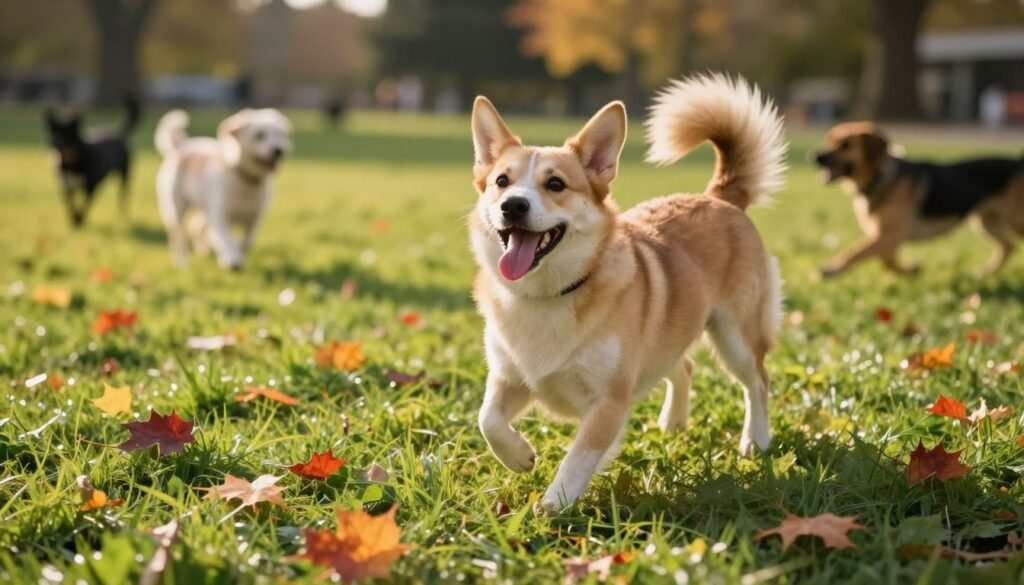
Observing your dog’s playful body language is key to understanding their emotional state and overall happiness. When dogs are in a playful mood, they exhibit specific behaviors that are both entertaining and telling of their comfort and joy.
The Bouncy Play Stance
A characteristic sign of playfulness in dogs is the bouncy play stance, where they stand with their front legs bent and their rear end elevated. This posture is an invitation to play and indicates a readiness for fun and interaction.
Relaxed vs. Play-Excited Body Language
Distinguishing between relaxed and play-excited body language is crucial. A relaxed dog will have a loose, open posture, while a play-excited dog will display more energetic movements and possibly a more intense gaze. Recognizing these differences helps in understanding your dog’s current emotional state.
Signs Your Dog Is Truly Happy
Signs of true happiness in dogs include a relaxed, open posture, a wagging tail, and a calm, contented expression. These indicators, combined with playful behaviors, signify a dog that is emotionally fulfilled and comfortable in their environment.
How Context Affects Dog Body Language
Dog body language doesn’t happen in a vacuum; it’s affected by various contextual factors. Understanding these factors is crucial for accurately interpreting your dog’s signals.
Environmental Influences on Expression
The environment plays a significant role in shaping your dog’s behavior and body language. For instance, a dog may exhibit different behaviors in a quiet home versus a busy park. Noise levels, the presence of other animals, and even the weather can influence a dog’s stress levels and, consequently, their body language.
Social Dynamics and Communication
Social dynamics are another critical factor. The presence of other dogs, humans, or even other pets can significantly alter a dog’s behavior. For example, a dog may be more subdued around older dogs but more energetic around puppies.
The Importance of Baseline Behavior
Understanding your dog’s baseline behavior is essential for recognizing changes in their emotional state. By knowing what’s normal for your dog, you can better identify when they’re feeling stressed, anxious, or happy.
| Contextual Factor | Impact on Dog Body Language |
|---|---|
| Environmental Noise | Increased stress or anxiety |
| Social Presence | Changes in behavior based on the other animal or human |
| Baseline Behavior | Helps in identifying deviations from normal behavior |
Common Misinterpretations of Canine Signals
Dog owners often misinterpret their pet’s signals, leading to confusion and potential conflicts. Understanding canine body language is crucial for building a strong, positive relationship with your dog.
The Myth of the Guilty Look
One common misinterpretation is the “guilty look.” Many owners believe this expression indicates their dog is aware of misbehaving. However, research suggests this look is more likely a response to the owner’s behavior, indicating fear or submission rather than guilt.
Mistaking Fear for Aggression
Fearful dogs may display behaviors that resemble aggression, such as growling or showing their teeth. It’s essential to recognize the subtle differences between fear and aggression to respond appropriately and avoid escalating the situation.
When Wagging Tails Don’t Mean Happiness
A wagging tail is often assumed to indicate happiness. However, the context and other body language cues should be considered. A wagging tail can also signify anxiety or excitement, not just joy.
Anthropomorphizing Dog Behaviors
Attributing human characteristics to dogs can lead to misinterpretations. Dogs do not feel complex emotions like humans do; their behaviors are driven by instinct and conditioning. Accurate reading dog body postures requires understanding their natural behaviors.
By being aware of these common misinterpretations and taking the time to learn about interpreting dog gestures, dog owners can improve their communication with their pets, fostering a more harmonious and loving relationship.
Conclusion: Building a Stronger Bond Through Understanding
Understanding dog body language is a powerful tool for strengthening the bond between you and your dog. By recognizing and interpreting your dog’s emotional state and behavior, you can provide a more comfortable, secure, and loving environment.
Throughout this guide, we’ve explored the various aspects of canine communication, from tail movements and ear positions to facial expressions and body postures. By applying this knowledge, you can deepen your understanding of your dog’s needs and emotions, leading to a more fulfilling relationship.
Effective dog body language interpretation relies on understanding pet behavior cues, such as interpreting dog gestures and reading dog body postures. By doing so, you can better respond to your dog’s needs, fostering a stronger and more meaningful connection.
As you continue to develop your skills in understanding your dog’s signals, you’ll find that your relationship becomes more empathetic and rewarding. By paying attention to canine communication, you can create a more harmonious and loving environment for your dog to thrive.