
As a pet owner, maintaining a clean and safe environment for your furry friends can be challenging. Pets bring joy and companionship, but they also bring dirt, dander, and sometimes, accidents. Ensuring your home is clean and free from harmful substances is crucial for their health and well-being.
Using pet-friendly cleaning methods and products is a great way to achieve this balance. Not only do these methods help keep your pets safe, but they also contribute to a healthier environment for your entire family. In this article, we’ll explore effective and safe cleaning practices that cater to pet owners.
Key Takeaways
- Effective pet-friendly cleaning products
- Natural alternatives for stain and odor removal
- Safe floor care practices
- Creating a cleaning schedule
- Tips for a pet-safe cleaning routine
The Unique Cleaning Challenges Pet Parents Face
The joys of pet ownership are often accompanied by unique cleaning challenges. Pets bring immense joy and companionship into our lives, but they also bring their own set of messes and accidents.
Common Pet Messes and Their Impact on Your Home
From shedding fur to accidents on the carpet, pets can significantly impact the cleanliness of your home. Pet hair and dander can accumulate quickly, exacerbating allergies and making your home look unkempt. Moreover, pet accidents can leave stubborn stains and unpleasant odors if not addressed promptly.
Why Traditional Cleaning Products May Be Harmful
Many traditional cleaning products contain harsh chemicals that can be harmful to pets. These products can leave residues on surfaces that pets may ingest while grooming, potentially leading to health issues. Opting for non-toxic cleaning solutions is crucial for maintaining a safe environment for your pets.
By understanding these challenges, pet parents can take the first step towards creating a cleaner, safer home for their pets.
Home Cleaning Tips for Pet Parents: The Essential Guide
As a pet parent, maintaining a clean home can be challenging, but with the right strategies, it’s achievable. A well-structured cleaning routine is key to keeping your home tidy and hygienic despite the presence of pets.
Daily Maintenance Strategies
Daily maintenance is crucial for efficient home cleaning with pets. Start by creating a routine that includes quick pick-ups of toys and pet accessories, wiping down surfaces that pets come into contact with, and vacuuming or sweeping high-traffic areas. It’s also essential to clean your pet’s food and water bowls daily and their bedding at least once a week.
To make daily maintenance easier, consider using multi-purpose cleaning tools that can tackle various messes, from pet hair to spills. Keeping these tools handy will encourage you to clean as you go, reducing the likelihood of messes building up.
Weekly Deep Cleaning Routines
While daily maintenance keeps your home looking presentable, weekly deep cleaning routines are necessary for a more thorough clean. This includes tasks like mopping floors, cleaning out pet areas such as litter boxes or cages, and dusting surfaces that tend to accumulate pet dander.
Creating a home cleaning checklist for pet lovers can help ensure that no area of your home is overlooked. By dedicating a few minutes each day and a couple of hours on the weekend to cleaning, you can maintain a clean, comfortable, and healthy environment for both you and your pets.
Pet-Safe Cleaning Products: What to Look For
As a pet parent, choosing the right cleaning products is crucial for maintaining a safe and healthy environment. The cleaning products you use can significantly impact your pet’s health, especially if they ingest or come into contact with harmful chemicals.
Harmful Ingredients to Avoid
Many conventional cleaning products contain harsh chemicals that can be toxic to pets. Common harmful ingredients include bleach, ammonia, and phenol. These can cause irritation, poisoning, or even organ damage if ingested or inhaled by pets. Always check the ingredient list and look for certifications like EPA Safer Choice or Green Seal, which indicate the product meets certain safety standards.
Recommended Pet-Friendly Commercial Cleaners
Several brands offer pet-friendly cleaning solutions that are effective and safe. Seventh Generation, Ecover, and Method are popular choices that offer a range of products from all-purpose cleaners to laundry detergents. These brands are known for their commitment to sustainability and safety.
Safety Considerations for Homes with Children and Pets
When choosing cleaning products, it’s not just about the pets; children are also vulnerable to chemical exposure. Opt for products that are labeled as non-toxic and hypoallergenic. Always store cleaning supplies out of reach of both children and pets, and consider using locked cabinets or high shelves to prevent accidents.
Natural Cleaning Solutions Safe for Pets and Children
Natural cleaning solutions offer a safe and effective way to keep your home clean with pets and children. These alternatives to harsh chemicals can be just as effective, if not more so, in maintaining a clean and healthy environment.
Vinegar-Based Cleaners and Their Applications
Vinegar is a versatile and natural cleaning agent. Its acidic properties make it effective against many types of bacteria and germs. Mix equal parts water and white vinegar in a spray bottle for an all-purpose cleaner. It’s safe for most surfaces, including countertops, sinks, and floors.
Baking Soda Solutions for Odor Control
Baking soda is another natural wonder for cleaning and odor control. It can absorb odors in refrigerators and freezers, and when mixed with water, it forms a paste that can clean surfaces without scratching them. It’s particularly effective for removing tough stains and odors from carpets and upholstery.
Lemon, Hydrogen Peroxide, and Other Natural Alternatives
Lemon juice and hydrogen peroxide are other effective natural cleaning agents. Lemon juice can be used to clean and deodorize, while hydrogen peroxide is a powerful disinfectant. Always dilute these substances appropriately to avoid damage to surfaces.
Essential Oil Safety and Effective Uses
Essential oils can add a pleasant scent to your cleaning solutions and have antimicrobial properties. However, they must be used with caution around pets, as some can be toxic. Always research the safety of an essential oil before using it in your cleaning routine.
By incorporating these natural cleaning solutions into your cleaning routine, you can maintain a clean home that’s safe for both your pets and children. “A clean home is a happy home,” and with these tips, you can achieve that without compromising on safety.
Conquering Pet Odors Throughout Your Home
Conquering pet odors requires a multi-faceted approach that addresses the source, air quality, and fabric freshness. Pet owners often face challenges in maintaining a fresh-smelling home due to the various sources of odors associated with pets.
Identifying and Eliminating Source Odors
The first step in conquering pet odors is identifying and eliminating the source. Common sources include pet bedding, litter boxes, and areas where pets frequent. Regular cleaning and maintenance of these areas are crucial. For instance, washing pet bedding weekly and daily scooping of litter boxes can significantly reduce odors.
Air Purification Strategies
Improving air quality is vital in reducing pet odors. Using air purifiers, especially those with HEPA filters, can help remove odor-causing particles from the air. Additionally, opening windows for ventilation and using fans to circulate air can help in reducing stale odors.
Fabric and Upholstery Deodorizing Techniques
Fabrics and upholstery can trap pet odors, making it essential to deodorize them regularly. Using baking soda, fabric sprays, or enzymatic cleaners can help eliminate these odors. For instance, sprinkling baking soda on carpets and upholstery, letting it sit, and then vacuuming can be very effective.
| Deodorizing Method | Application | Effectiveness |
|---|---|---|
| Baking Soda | Carpets, Upholstery | High |
| Enzymatic Cleaners | Organic Stains and Odors | High |
| Essential Oils | Air Freshening, Surfaces | Moderate |
By implementing these strategies, pet owners can significantly reduce unwanted odors in their homes, creating a more pleasant living environment for both pets and their families. Regular maintenance and the right cleaning products are key to efficient home cleaning with pets and maintaining best cleaning practices for pet-friendly homes.
Effective Stain Removal Techniques for Pet Accidents
The key to successful stain removal lies in acting quickly and using the appropriate cleaning solutions. Pet accidents can leave behind stubborn stains and unpleasant odors, but with the right techniques, you can restore your home to its original cleanliness.
Fresh Stain Emergency Response
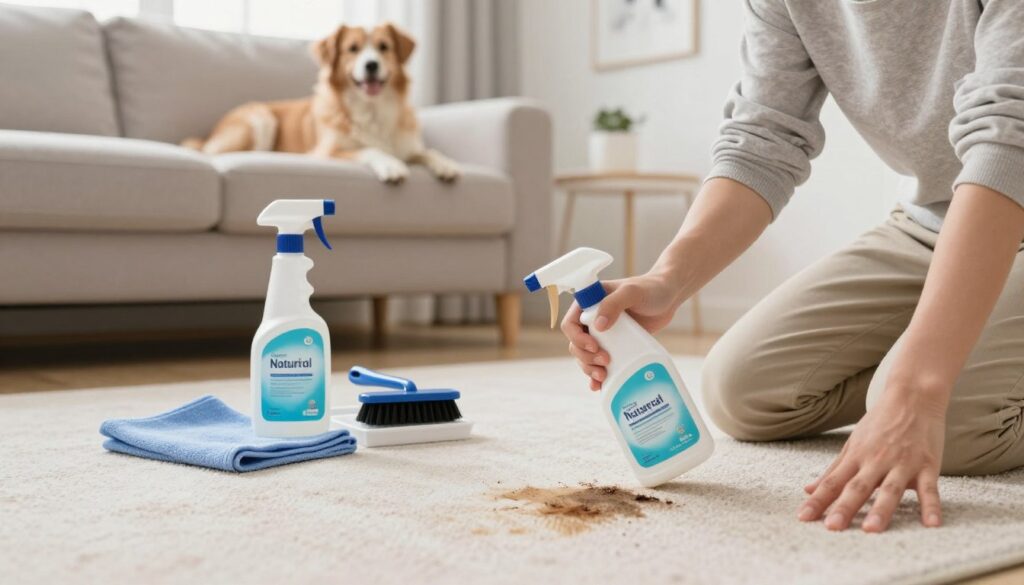
When dealing with fresh pet stains, immediate action is crucial. Begin by blotting the stain with a clean cloth or paper towel to absorb as much of the spill as possible. Avoid rubbing the stain, as this can push it deeper into the fabric or surface.
For liquid stains, use a mixture of cold water and mild detergent to gently clean the area. For solid stains, remove the solid material first, then clean the area with a damp cloth.
Treating Set-In Stains
Set-in stains require more aggressive treatment. Apply a stain remover or a solution of equal parts water and white vinegar directly to the stain. Let it sit for a few minutes before washing or blotting.
Specialized Solutions for Different Surfaces
Different surfaces require different cleaning approaches. For example, hardwood floors may require a wood-specific cleaner, while carpets may need a carpet stain remover.
| Surface | Recommended Cleaner |
|---|---|
| Hardwood Floors | Wood-specific cleaner |
| Carpets | Carpet stain remover |
| Upholstery | Fabric-specific cleaner |
Enzymatic Cleaners: How They Work and When to Use Them
Enzymatic cleaners contain enzymes that break down protein-based stains, such as those caused by pet urine or feces. These cleaners are highly effective at removing both the stain and the odor.
Use enzymatic cleaners on organic stains, and always follow the product instructions for best results.
Floor Care Strategies for Homes with Pets
With pets around, floor care becomes a crucial aspect of maintaining a clean and comfortable living space. Different types of flooring require unique care strategies to keep them looking their best and to ensure they remain safe for your pets.
Best Practices for Hardwood Floors
Hardwood floors are a popular choice for many homes, but they can be susceptible to scratches and damage from pet accidents. To maintain their integrity, it’s essential to clean spills immediately and use pet-friendly cleaning products. Regular sweeping and mopping with a gentle cleaner can help preserve the finish and keep your hardwood floors looking great.
Carpet Maintenance and Deep Cleaning
Carpets can trap pet dander, odors, and stains, making regular maintenance crucial. Vacuuming frequently, especially in high-traffic areas, is a must. For deeper cleaning, consider using a carpet cleaner that is designed to remove pet stains and odors. It’s also beneficial to have your carpets professionally cleaned periodically to remove deep-seated dirt and allergens.
Tile and Laminate Floor Protection
Tile and laminate floors are generally more resistant to pet accidents than hardwood, but they still require regular care. Sweeping or vacuuming regularly to remove dirt and debris can prevent scratching. For laminate floors, avoid using excessive water, as it can cause damage. Instead, use a damp mop with a cleaner suitable for laminate flooring.
Area Rug Cleaning and Preservation
Area rugs can add warmth and style to your home, but they can also trap pet hair and stains. Regular vacuuming and spot cleaning can help maintain their appearance. For more thorough cleaning, consider taking your area rugs to a professional cleaner who specializes in pet stain removal.
By implementing these floor care strategies, pet owners can maintain a clean, safe, and welcoming home for both their family and their pets.
Furniture and Upholstery Protection and Cleaning
Pets can bring immense joy, but they also present unique challenges for keeping your furniture clean. As a pet parent, you’re likely no stranger to the struggles of maintaining pristine furniture amidst the chaos of pet ownership.
Preventative Measures for Pet-Friendly Furniture
To protect your furniture, consider using pet-friendly fabrics and covers. These can be easily removed and washed, reducing the risk of stains and damage. Additionally, applying a fabric protector can help repel spills and stains.
Effective Cleaning Methods for Different Fabrics
Different fabrics require different cleaning approaches. For instance, microfiber furniture can be cleaned with a damp cloth, while velvet requires a gentler touch, often necessitating specialized cleaning products. Always check the manufacturer’s instructions before attempting to clean any piece of furniture.
Dealing with Pet Hair on Furniture
Pet hair can be a persistent issue on furniture. Using a rubber glove or a lint roller can be effective for removing pet hair from upholstery. For more stubborn hair, a vacuum cleaner with an upholstery attachment can be very helpful.
By implementing these quick cleaning hacks for pet parents, you can maintain a cleaner, more comfortable living space for both you and your pets.
Species-Specific Cleaning Challenges and Solutions
The type of pet you have significantly influences the cleaning challenges you’ll face and the solutions you’ll need. Different pets bring different messes, requiring tailored cleaning approaches to keep your home clean and hygienic.
Dog-Specific Cleaning Considerations
Dogs, especially those with thick coats, shed a lot, creating a need for frequent vacuuming and dusting. Regular grooming can reduce shedding, but it’s also essential to have a reliable vacuum cleaner designed for pet hair. Additionally, dogs often bring dirt and allergens into the home, making it crucial to maintain a clean entryway and regularly clean floors.
Cat-Friendly Home Cleaning Approaches
Cats are meticulous about their grooming, but they can still create messes, especially with litter boxes. Daily litter box cleaning and regular changing of the litter are vital. Moreover, cats shed, although typically less than dogs. Using a gentle cleaner on surfaces that cats come into contact with is important to prevent harm.
Small Pets and Specialized Cleaning Needs
Small pets, like rabbits or guinea pigs, have specific cleaning needs, particularly regarding their cages and bedding. Regular cage cleaning and changing of bedding are crucial to prevent odors and health issues. It’s also important to vacuum around their areas frequently to capture stray hair and dander.
Understanding these species-specific cleaning challenges allows pet owners to adopt more efficient home cleaning strategies, creating a healthier environment for both pets and their owners. By tailoring your cleaning approach to your pet’s needs, you can maintain a clean, happy home.
Creating an Effective Cleaning Schedule for Pet Households
Maintaining a clean home with pets requires a strategic approach to cleaning. Establishing a routine can help pet owners stay on top of messes and maintain a hygienic environment.
Daily Quick-Clean Routines
Daily quick-clean routines are essential for maintaining a clean home. These routines should include tasks such as wiping down surfaces, quick-pickup of toys and clutter, and a swift vacuum or sweep of high-traffic areas.
- Wipe down kitchen counters and sink after meals
- Quickly pick up pet toys and clutter
- Vacuum or sweep high-traffic areas
Weekly Maintenance Tasks
Weekly maintenance tasks help to keep the home clean and hygienic. These tasks should include:
- Mopping floors
- Cleaning bathrooms
- Changing bed linens
Monthly Deep Cleaning Priorities
Monthly deep cleaning is crucial for tackling harder-to-clean areas and tasks. This includes:
- Deep cleaning the oven
- Cleaning out the fridge
- Dusting and cleaning furniture and fixtures
Seasonal Cleaning Projects
Seasonal cleaning projects help to keep the home fresh and clean throughout the year. Examples include:
- Spring: Cleaning out gutters, washing windows
- Summer: Organizing outdoor spaces, cleaning patio furniture
- Autumn: Cleaning leaves from yards, preparing homes for winter
- Winter: Insulating pipes, checking for drafts
| Frequency | Tasks |
|---|---|
| Daily | Wipe down surfaces, quick-pickup of clutter |
| Weekly | Mop floors, clean bathrooms, change bed linens |
| Monthly | Deep clean oven, clean out fridge, dust furniture |
| Seasonal | Clean gutters, wash windows, organize outdoor spaces |
By following this structured cleaning schedule, pet owners can maintain a clean, hygienic, and comfortable home environment for both themselves and their pets.
Time-Saving Cleaning Tools Every Pet Parent Needs
The right cleaning tools can significantly reduce the cleaning time for pet parents, making it a more manageable task. With pets shedding fur and sometimes having accidents, having the right equipment is crucial for maintaining a clean and healthy home.
Vacuum Cleaners Designed for Pet Hair
A good vacuum cleaner is essential for pet parents. Look for models with powerful suction and specialized pet hair attachments. Brands like Dyson and Shark offer excellent options designed specifically for pet owners.
Microfiber and Specialized Pet Hair Removal Tools
Microfiber cloths and specialized pet hair removal tools can make quick work of pet hair on furniture and clothing. These tools are designed to pick up hair easily, reducing the time spent on cleaning.
Automated Cleaning Devices Worth the Investment
Automated cleaning devices like robot vacuums can be a significant investment for pet parents. They help maintain a clean home by regularly vacuuming floors, even when you’re not around.
Multi-Purpose Tools for Efficient Cleaning
Using multi-purpose cleaning tools can streamline your cleaning process. Look for products that can be used on various surfaces, from hardwood floors to upholstery.
| Tool | Benefit | Example |
|---|---|---|
| Pet Hair Vacuum | Efficient pet hair removal | Dyson Animal Series |
| Microfiber Cloths | Easy to use on various surfaces | Furminator deShedding Tool |
| Robot Vacuums | Automated floor cleaning | iRobot Roomba |
Conclusion: Maintaining a Clean and Pet-Friendly Home
As a pet parent, maintaining a clean home can be a daunting task. However, with the right home cleaning tips for pet parents, you can create a safe and healthy environment for both your pets and your family.
By implementing daily maintenance strategies, using pet-friendly cleaning tips, and investing in time-saving cleaning tools, you can keep your home clean and hygienic. Remember to choose pet-safe cleaning products and natural cleaning solutions to avoid harming your pets.
Effective stain removal techniques, floor care strategies, and furniture protection can also help you maintain a clean and pet-friendly home. By creating an effective cleaning schedule and being mindful of species-specific cleaning challenges, you can ensure a clean and comfortable living space for everyone.
By following these home cleaning tips for pet parents, you can enjoy a clean, safe, and happy home with your pets.