

Choosing the right family dog breed is crucial when you have kids. The ideal breed should be gentle, patient, and energetic enough to keep up with your family’s lifestyle.
With so many dog breeds out there, it can be overwhelming to decide which one is best for your family. In this article, we’ll explore the factors to consider when selecting a new furry friend, including temperament, size, and energy levels.
Key Takeaways
- Consider a breed’s temperament when choosing a family dog.
- Size and energy levels are crucial factors in selecting a breed.
- Gentle and patient breeds are ideal for families with kids.
- Research different breeds to find the best fit for your family.
- A happy dog is a result of a well-informed decision.
Why Choosing the Right Dog Breed Matters for Families
Choosing the right dog breed is a crucial decision for families, as it can significantly impact the well-being of both children and the dog. A suitable breed can bring immense joy and companionship, while an inappropriate one can lead to stress and difficulties.
Factors to Consider When Selecting a Family Dog
When selecting a dog breed for your family, several factors come into play. The dog’s temperament, energy level, and size are crucial considerations. A gentle and patient dog breed is ideal for families with young children. It’s also important to consider your family’s lifestyle, including your living situation and the amount of time you can dedicate to your dog.
| Factor | Considerations | Impact |
|---|---|---|
| Temperament | Gentle, patient, friendly | Ensures a safe and welcoming environment for children |
| Energy Level | Matches family’s activity level | Avoids frustration and ensures the dog gets enough exercise |
| Size | Sufficient space at home | Prevents overcrowding and ensures the dog has enough space to live comfortably |
How Children Benefit from Growing Up with Dogs
Growing up with dogs can have numerous benefits for children, including teaching them responsibility, empathy, and social skills. Children can learn to care for a dog, understanding the importance of feeding, grooming, and providing exercise. This responsibility can translate into other areas of life, promoting a sense of compassion and understanding towards others.
Moreover, having a dog can help children develop social skills, such as communication and confidence, as they interact with their pet and other dog owners. Popular dog breeds that are often considered great family pets include Labrador Retrievers and Golden Retrievers, known for their friendly and gentle nature.
Key Traits of Family-Friendly Dogs
Family-friendly dogs come with a unique set of traits that make them ideal companions for households with children. These traits not only ensure the dog’s well-being but also contribute to a harmonious family environment.
Temperament and Patience
A dog with a good temperament is patient, gentle, and even-tempered, making them suitable for families with young children. Breeds like the Labrador Retriever and Golden Retriever are known for their excellent temperament.
Energy Levels and Exercise Needs
The energy level of the dog should match the family’s activity level. For instance, families who enjoy outdoor activities may prefer high-energy breeds like the Australian Shepherd, while less active families might prefer lower-energy breeds like the Bulldog.
Size Considerations
Size is another crucial factor; while larger dogs like the Newfoundland may seem intimidating, smaller dogs like the Cavalier King Charles Spaniel can be fragile and require more care. Understanding these size considerations helps in choosing between best small dog breeds and best large dog breeds.
| Trait | Description | Example Breeds |
|---|---|---|
| Temperament and Patience | Patient, gentle, and even-tempered | Labrador Retriever, Golden Retriever |
| Energy Levels and Exercise Needs | Matches family’s activity level | Australian Shepherd, Bulldog |
| Size Considerations | Consideration of dog’s size and fragility | Cavalier King Charles Spaniel, Newfoundland |
Best Dog Breeds for Families with Young Children
When it comes to choosing a dog for families with young kids, some breeds stand out for their gentle and patient nature. These breeds not only provide companionship but also help teach children valuable lessons about responsibility and empathy.
Labrador Retriever
The Labrador Retriever is often considered one of the best dog breeds for families. Known for their friendly and outgoing personalities, Labs are highly energetic and love to play, making them perfect playmates for children. Their intelligence and ease of training also make them a popular choice.
Golden Retriever
Similar to Labradors, Golden Retrievers are renowned for their gentle and patient nature, making them an excellent choice for families with young children. They are energetic, love to play, and are highly intelligent, which makes training easier.
Beagle
Beagles are small, curious, and friendly dogs that are great with children. They are relatively low maintenance compared to larger breeds and are known for their energetic and adventurous spirit.
Bulldog
Despite their tough appearance, Bulldogs are known for being affectionate and laid-back, making them a great choice for families. They are relatively low maintenance in terms of exercise needs but require regular grooming.
| Breed | Energy Level | Grooming Needs |
|---|---|---|
| Labrador Retriever | High | Low |
| Golden Retriever | High | Moderate |
| Beagle | Medium | Low |
| Bulldog | Low | High |
As shown in the table, each of these breeds has its unique characteristics. Choosing the right breed depends on the family’s lifestyle and preferences. According to dog trainers, “The key to a harmonious household is matching the dog’s energy level and needs with the family’s activity level and lifestyle.”
“Dogs are not our whole lives, but they make our lives whole.”
In conclusion, the Labrador Retriever, Golden Retriever, Beagle, and Bulldog are among the best family dog breeds for families with young children. Each breed offers unique qualities that can enrich family life.
Best Small Dog Breeds for Family Homes
When it comes to choosing a dog for a family with limited space, certain small breeds stand out for their temperament and energy levels. These dogs are not only adorable but also bring immense joy and companionship to family life.
Cavalier King Charles Spaniel
The Cavalier King Charles Spaniel is known for its gentle and affectionate nature, making it an excellent choice for families with children. This breed is relatively small in size but has a big heart, always eager to play or cuddle.
Boston Terrier
Boston Terriers are friendly and outgoing, often forming strong bonds with their family members. They are relatively low maintenance and adapt well to apartment living due to their small size and moderate energy level.
Shih Tzu
The Shih Tzu is a friendly, loyal, and outgoing breed that thrives on human interaction. They are well-suited for families who can provide them with plenty of attention and affection.
Pug
Pugs are playful and loving, requiring moderate exercise and plenty of attention from their family. Their small size and adaptable nature make them a great fit for families living in smaller homes.
Best Medium-Sized Dog Breeds for Active Families
When it comes to active families, the right dog breed can make all the difference in creating a harmonious home. Medium-sized dog breeds are often ideal as they balance energy levels, being neither too high nor too low, making them perfect companions for families who enjoy outdoor activities.
Cocker Spaniel
Cocker Spaniels are known for their loving nature and enjoy participating in family activities. They require regular grooming but are generally happy to engage in play and go on walks, making them a great fit for active families.
Collie
Collies are highly intelligent and agile, making them excellent for active families. They are easy to train and love to be involved in family activities, whether it’s going on a hike or playing in the backyard.
Vizsla
Vizslas are energetic dogs that thrive on activity. They love to hunt and require plenty of exercise to stay happy and healthy. For active families who enjoy outdoor pursuits, a Vizsla can be an excellent companion.
Australian Shepherd
Australian Shepherds are highly intelligent and love to work. They are perfect for active families who can provide them with plenty of physical and mental stimulation through training and exercise.
In conclusion, these medium-sized dog breeds are among the best dog breeds for active families. They offer a mix of energy, intelligence, and loyalty, making them top dog breeds for families who enjoy an active lifestyle.
- Cocker Spaniels offer loving companionship.
- Collies provide intelligence and agility.
- Vizslas bring energy and a love for hunting.
- Australian Shepherds offer intelligence and a strong work ethic.
Best Large Dog Breeds for Spacious Family Homes
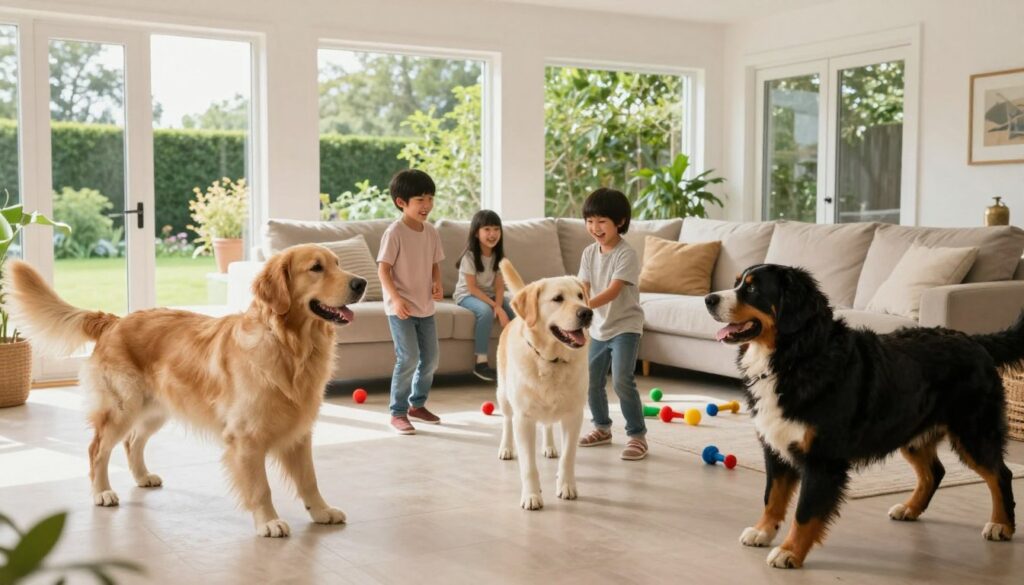
If you have a spacious home, consider welcoming a large dog breed into your family. Large dog breeds can be a great fit for families with ample space, offering love, companionship, and protection. These breeds are often gentle, patient, and energetic, making them ideal for families with children.
Bernese Mountain Dog
The Bernese Mountain Dog is a gentle giant, known for its calm and patient nature. They are excellent with children and make great family pets. Their thick coats require regular grooming, but they are generally low maintenance.
Newfoundland
Newfoundlands are famous for their rescue instincts and are great with children. They are often referred to as “nanny dogs” due to their protective and caring nature. Despite their large size, they are gentle and laid-back.
Great Dane
Great Danes are friendly and gentle, despite their large size. They are often described as “gentle giants” and are great companions for families. They require regular exercise to stay healthy and happy.
Irish Setter
Irish Setters are energetic and love to play, making them ideal for active families with plenty of space. They are friendly, outgoing, and love to be around people. Regular exercise and mental stimulation are key to keeping them happy.
| Breed | Temperament | Exercise Needs |
|---|---|---|
| Bernese Mountain Dog | Gentle, Patient | Moderate |
| Newfoundland | Gentle, Protective | Moderate |
| Great Dane | Friendly, Gentle | Regular |
| Irish Setter | Energetic, Friendly | High |
As noted by dog experts, “large dog breeds can bring immense joy and companionship to families, provided they have the space and resources to care for them.”
“A large dog can be a wonderful addition to a family, teaching children about responsibility and compassion.”
Best Hypoallergenic Dog Breeds for Families with Allergies
Hypoallergenic dog breeds offer a solution for families who want to bring a dog into their home without exacerbating allergy issues. These breeds are not 100% allergen-free, but they produce fewer allergens than other breeds, making them a great choice for households with allergy concerns.
- Poodle
- Bichon Frise
- Portuguese Water Dog
- Maltese
Poodle
Poodles are known for their intelligence and low-shedding coat, making them an excellent choice for families with allergies. They come in various sizes (Toy, Miniature, Standard), so you can choose the size that best fits your family’s lifestyle.
Bichon Frise
Bichon Frises are playful, friendly dogs with coats that require regular grooming but produce less dander. Their gentle nature makes them a great companion for children.
Portuguese Water Dog
Portuguese Water Dogs are active, intelligent dogs with curly or wavy coats that are hypoallergenic. They are highly trainable and love to please their owners.
Maltese
Maltese dogs are gentle, affectionate companions with silky, hypoallergenic coats. They are well-suited for families with older children who understand how to handle them gently.
When choosing a hypoallergenic dog breed, it’s essential to spend time with the dog to gauge your allergic reaction. Regular grooming and a clean home can also help reduce allergen exposure.
Best Low Maintenance Dog Breeds for Busy Families
Low maintenance dog breeds are a blessing for busy families who want a pet without the extra hassle. These breeds are characterized by their adaptability, calm nature, and minimal grooming needs, making them perfect for families with tight schedules.
When looking for a low maintenance dog breed, several factors come into play. You want a dog that is easy-going, doesn’t require a lot of exercise, and has a short, easy-to-maintain coat. Here are some breeds that fit the bill.
Basset Hound
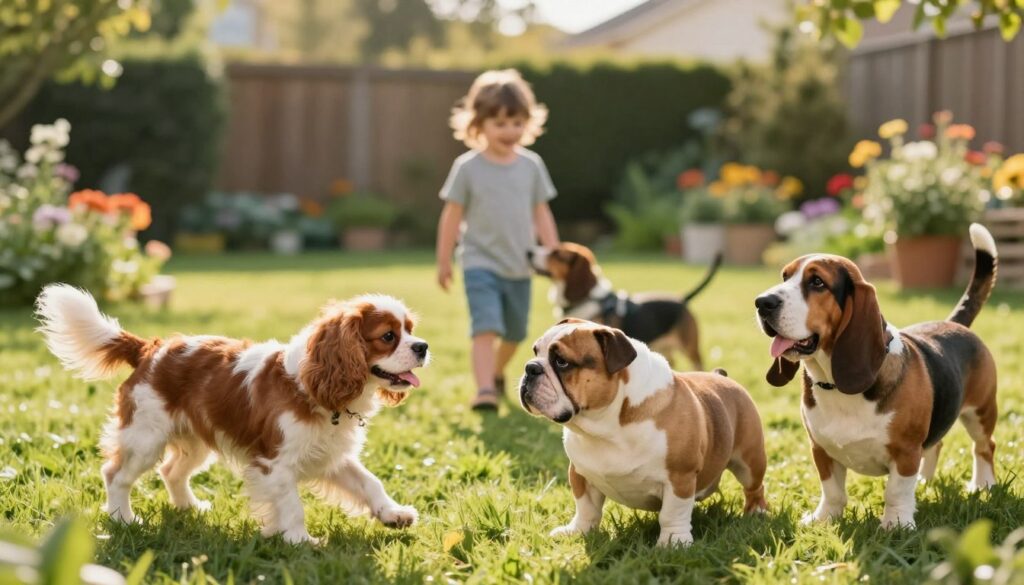
The Basset Hound is known for its calm and relatively low energy level, making it an ideal breed for busy families. They require less exercise compared to other breeds and are generally happy with short walks. Their short coats also mean less grooming.
Greyhound
Despite their athletic ability, Greyhounds are often referred to as “40 mph couch potatoes” because they are quiet and laid-back. They don’t require a lot of exercise, and their short coats are easy to maintain.
French Bulldog
French Bulldogs are adaptable and have minimal exercise needs. They are perfect for city living or for families who don’t have a lot of time for long walks or strenuous activities. Their short coats require minimal grooming.
Boxer
Boxers are energetic dogs, but they have short coats that require minimal grooming. They need regular exercise, but this can be managed with daily walks and playtime, making them suitable for families with busy schedules.
In conclusion, these low maintenance dog breeds are perfect for busy families. They offer companionship without the high maintenance needs, making them ideal pets for those with limited time.
Safety Considerations: Dogs and Children
To create a harmonious home for both dogs and kids, understanding safety considerations is crucial. Ensuring the well-being of both children and dogs requires attention to detail and a proactive approach.
Teaching Children How to Interact with Dogs
It’s essential to teach children how to interact with dogs gently and respectfully. This includes not teasing dogs, not pulling their ears or tails, and understanding when a dog needs space. By educating children on these matters, we can significantly reduce the risk of conflicts between dogs and children.
Warning Signs to Watch For
Being aware of a dog’s body language is vital. Warning signs such as growling, showing teeth, or avoiding eye contact indicate that a dog is feeling stressed or threatened. Recognizing these signs early can help prevent incidents.
Creating Safe Spaces for Both Dogs and Kids
Creating safe spaces for both dogs and children is important. Dogs need areas where they can retreat when feeling overwhelmed, and children should have spaces where they can play without inadvertently disturbing the dog. This mutual respect for personal space can greatly enhance household harmony.
| Safety Tips | Benefits |
|---|---|
| Teach children to interact gently with dogs | Reduces risk of conflicts |
| Watch for warning signs in dog behavior | Prevents incidents |
| Create safe spaces for dogs and children | Enhances household harmony |
Introducing a New Dog to Your Family
Introducing a new dog to your family involves more than just bringing a pet home; it’s about creating a harmonious household. When done correctly, it can lead to a loving and joyful environment for both your family and the dog.
Setting Ground Rules
Setting ground rules is essential when introducing a new dog to your family. It’s crucial to teach children how to interact with the dog gently and respectfully. Establishing rules helps prevent misunderstandings and ensures a smooth transition for the dog into your home.
- Teach children to pet the dog gently.
- Establish areas where the dog can retreat if feeling overwhelmed.
- Supervise interactions between the dog and young children.
Supervised Interactions
Supervising interactions between the dog and children, especially in the early stages, is vital. This helps in identifying any signs of stress or aggression in the dog and taking prompt action to prevent any conflicts. Supervision is key to a harmonious household.
Building a Strong Bond Between Dog and Children
Building a strong bond between the dog and children involves spending quality time together. Engage in activities that both the dog and children enjoy, such as playing fetch or going on walks. This helps in creating a strong, loving relationship between them.
By following these steps and being patient, you can create a loving environment where your new dog feels welcome and your children learn valuable lessons about responsibility and compassion.
Conclusion
Selecting the ideal dog breed for your family is a crucial decision that can significantly impact your household’s harmony and happiness. By considering factors such as temperament, size, and energy level, you can choose a breed that complements your lifestyle.
The top dog breeds for families are often characterized by their gentle, patient, and loving nature. Popular dog breeds like Labrador Retriever and Golden Retriever are excellent choices for families with young children. When it comes to best family dog breeds, it’s essential to consider your family’s specific needs and preferences.
Ultimately, the right dog breed can bring numerous benefits to your family, from companionship to improved health and happiness. By choosing a breed that fits your family’s lifestyle, you can create a happy and harmonious home for both your children and your new furry friend.