

Have you ever wondered if your furry friend truly comprehends what you’re saying? When you say “walk” or “treat,” your pet reacts instantly, but do they really grasp the meaning behind your words?
Research suggests that pets are capable of understanding certain words and phrases, often picking up on tone and context. Studies have shown that dogs, for example, can differentiate between various commands and even respond to the emotional tone of their owner’s voice.
As we explore the science behind pet communication, we’ll delve into the fascinating world of animal cognition and examine the ways in which our pets interpret human language.
Key Takeaways
- Research indicates that pets can understand specific words and commands.
- The tone and context of voice play a significant role in pet communication.
- Pets respond differently to various verbal cues and emotional expressions.
- Understanding pet language can strengthen the bond between pet and owner.
- Science provides insights into the complex world of animal cognition.
The Science of Pet-Human Communication
Understanding how pets comprehend human language is a complex task that has evolved significantly with advancements in animal cognition research. This field has grown substantially, offering insights into how pets process and understand human communication.
How Animal Cognition Research Has Evolved
Historically, animal cognition was studied through simple conditioning experiments. However, modern research employs more sophisticated methods, including brain imaging techniques and complex behavioural studies. This evolution has enabled scientists to better understand the intricacies of pet-human communication.
| Research Method | Description | Insights Gained |
|---|---|---|
| Brain Imaging | Uses techniques like fMRI to study brain activity | Reveals how pets process human language |
| Behavioral Studies | Observes pet responses to various commands and cues | Helps understand how pets learn and comprehend |
Current Scientific Understanding of Pet Comprehension
Current research indicates that pets, particularly dogs, possess a remarkable ability to understand certain human words and gestures. Studies have shown that dogs can recognise numerous words, including object names and commands. The science behind this comprehension is complex, involving both auditory and visual cues.
By understanding the current state of pet communication science, we can better appreciate the depth of our pets’ abilities and improve our interaction with them.
Can Pets Understand Human Words? The Research Evidence
Research into pet language comprehension has yielded fascinating insights into how animals understand human words. This section will delve into the landmark studies that have investigated pet word recognition and the findings of brain imaging studies that reveal how pets process human language.
Landmark Studies on Pet Word Recognition
Several landmark studies have explored the ability of pets, particularly dogs, to recognise and understand human words. One notable study demonstrated that dogs can learn to associate specific words with objects or actions, showcasing their capacity for word recognition. The ability of dogs to understand words is not limited to simple commands; they can also learn to recognise the names of various objects. For instance, a study published in the journal Science found that a dog named Chaser learned to understand over 1,000 words, highlighting the impressive vocabulary that some dogs can acquire.
Brain Imaging Studies and What They Reveal
Brain imaging studies have provided valuable insights into how pets process human language. Functional magnetic resonance imaging (fMRI) studies have shown that dogs have brain regions dedicated to processing human speech, indicating a level of comprehension. These studies have revealed that dogs can differentiate between words and process them in a way that is similar to humans. The use of brain imaging techniques has allowed researchers to gain a deeper understanding of the neural mechanisms underlying pet language comprehension.
By combining the findings of landmark studies on pet word recognition with the insights gained from brain imaging studies, we can gain a more comprehensive understanding of the capabilities and limitations of pet language comprehension.
Word Recognition vs. True Language Comprehension
Pets often appear to understand human communication, but the distinction between word recognition and true language comprehension is crucial. While pets may respond to certain words or commands, it’s essential to understand whether they merely recognise sounds or actually comprehend the meaning behind them.
The Difference Between Recognising and Understanding
Recognising words and understanding language are two different cognitive processes. Word recognition involves identifying a sound or sequence of sounds associated with a particular meaning or action. In contrast, true language comprehension involves not just recognising words but also understanding the complex rules governing their use, such as grammar and context.
How Pets Process Verbal Cues
Pets process verbal cues through a combination of associative learning and contextual understanding. They learn to associate certain sounds or words with actions, outcomes, or emotions. For instance, a dog may learn that the word “walk” is associated with going outside. However, this doesn’t necessarily mean they understand the word’s meaning in a linguistic sense. Instead, they respond to the sound and the context in which it’s used.
Research into animal cognition has shown that pets are highly attuned to their human companions’ voices, tone, and body language, which aids their ability to respond appropriately to verbal cues. This complex interplay between sound recognition, context, and emotional intelligence underlies the sophisticated communication we observe between humans and their pets.
Dogs: The Language Comprehension Champions
Dogs have long been considered man’s best friend, but their ability to understand human language is truly remarkable. Studies have shown that dogs are capable of picking up on a significant number of words, with some even learning hundreds of commands and object names.
Why Dogs Excel at Understanding Human Communication
Dogs excel at understanding human communication due to their evolution as social animals that thrive on interaction with their human companions. As Stanley Coren, a renowned expert in canine cognition, notes, “Dogs are highly attuned to human behaviour and have developed a unique capacity to read human social cues.” This ability allows them to pick up on verbal and non-verbal signals, making them highly responsive to commands and instructions.

The Average Dog’s Vocabulary Size
Research suggests that the average dog can learn around 100 to 200 words, although this number can vary significantly depending on the individual dog’s intelligence, training, and interaction with its owner. Border Collies, for example, are known to learn hundreds of words, with some exceptional cases learning over 1,000 words.
Famous Cases of Dogs with Exceptional Word Recognition
One of the most famous cases is that of Chaser, a Border Collie who learned the names of over 1,000 objects. As
“Chaser’s language ability is more like that of a human child than any other animal,”
said Dr. John Pilley, Chaser’s owner and trainer. Such exceptional cases highlight the impressive capabilities of some dogs and demonstrate the potential for advanced language comprehension in canine companions.
Cats and Their Unique Approach to Human Language
While dogs are renowned for their ability to understand human commands, cats are often seen as more aloof, leaving many to wonder if they truly comprehend human language. Research into feline comprehension has revealed that cats do respond to human verbal cues, but their approach to communication is distinctly different from that of dogs.
Do Cats Understand Words or Just Ignore Them?
Cats are known to recognise certain words, particularly those associated with positive reinforcement, such as their names or commands related to feeding. However, their response is often contingent on tone and context rather than the literal meaning of the words. Studies have shown that cats can differentiate between their owner’s voice and a stranger’s, indicating some level of auditory recognition.
How Cats Process Human Communication Differently
Cats process human communication with a focus on emotional cues and associative learning. Unlike dogs, who often seek to please their owners, cats are more independent and may choose to respond or ignore commands based on their mood or interest. This doesn’t mean they don’t understand human language; they simply have a different approach to processing it.
Other Pets and Their Language Abilities
While dogs and cats are often the focus of pet language studies, other animals also demonstrate remarkable language abilities. The diversity in pet language understanding is vast, and exploring this can reveal new insights into decoding animal behaviour.
Vocal Learning in Birds
Birds, particularly parrots and songbirds, are known for their vocal learning capabilities. They can mimic human speech and other sounds they hear in their environment. Some birds have been known to learn hundreds of words and use them in context. For example, African Greys are renowned for their ability to understand and reproduce human language, often using it to communicate their needs or emotions.
- Parrots can learn to associate words with meanings.
- Songbirds mimic complex melodies and rhythms.
- Birds use vocalisations to communicate with each other.
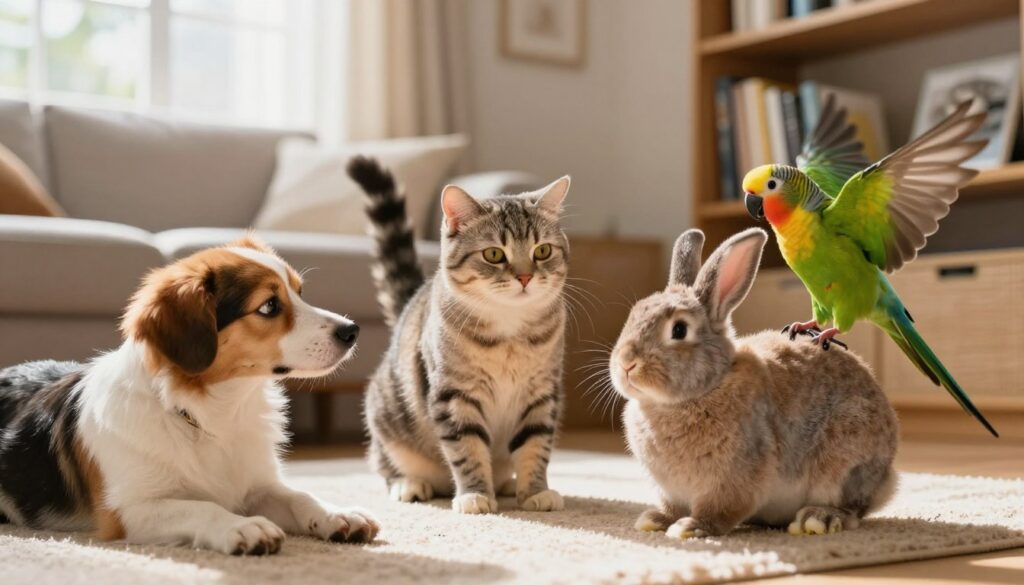
Understanding Horses, Rabbits, and Other Pets
Horses, rabbits, and other pets also show impressive language understanding. Horses can learn to respond to verbal commands and even simple sentences. Rabbits, while not as vocal, can be trained to recognise and respond to their names and basic commands. The key to their understanding lies in consistent training and positive reinforcement.
Some key aspects of pet language understanding include:
- Consistency in commands and cues.
- Positive reinforcement techniques.
- Association of words with actions or outcomes.
By exploring the language abilities of various pets, we can enhance our communication with them and strengthen our bond. Understanding how different animals process and respond to language can help us tailor our interactions to their unique needs and capabilities.
Beyond Words: How Pets Read Tone and Emotion
Research has shown that pets are highly attuned to the emotional nuances in human communication, picking up on subtle cues in our voice. This ability to understand tone and emotion is a crucial aspect of pet communication science, revealing the complexity of animal cognition.
When we interact with our pets, we often unconsciously modulate our tone to convey different messages or emotions. This modulation is known as prosody, a vital component of human language that pets have learned to interpret over centuries of domestication.
The Importance of Prosody in Pet Communication
Prosody refers to the rhythm, stress, and intonation of speech. It’s what allows us to convey sarcasm, excitement, or comfort through our voice alone. Pets, particularly dogs, have been found to be highly sensitive to these prosodic cues, using them to better understand our intentions and emotional states.
For instance, a soothing tone can calm an anxious pet, while a sharp tone can alert them to potential danger. This sensitivity to prosody is not limited to dogs; many pets, including cats and horses, have been observed responding to the emotional nuances in human voice.
How Pets Detect Emotional States Through Voice
Pets detect emotional states through voice by picking up on various acoustic features, such as pitch, volume, and tone. Studies in animal cognition have shown that pets can differentiate between positive and negative emotional states based on these vocal cues alone.
| Emotional State | Vocal Cue | Pet Response |
|---|---|---|
| Calmness | Soft, low-pitched voice | Relaxation, reduced anxiety |
| Excitement | High-pitched, energetic tone | Increased activity, playful behaviour |
| Anxiety/Stress | Tense, high-pitched voice | Concerned behaviour, seeking comfort |
Understanding how pets interpret tone and emotion can significantly enhance our communication with them, fostering a deeper and more empathetic bond.
Context and Association: How Pets Learn Words
Pets learn to understand human words through a complex process involving context and association. This process is fundamental to communication with pets and enhances pet language comprehension. When pets are exposed to words in various contexts, they begin to associate these words with meanings.
The Role of Repetition and Consistency
Repetition is key to helping pets learn new words. Consistent use of specific words in specific contexts aids in pet language comprehension. For example, saying “dinner” or “walk” regularly when performing these actions helps pets associate these words with the activities.
Consistency in using the same words for the same actions or objects helps reduce confusion and enhances a pet’s ability to understand human language.
How Environmental Cues Enhance Understanding
Environmental cues play a significant role in enhancing a pet’s understanding of human words. Pets observe their surroundings and the context in which words are used, helping them learn more effectively. For instance, a pet may learn that the word “outside” is associated with going out through a specific door.
“The more contextual information a pet has, the better it can understand the nuances of human language.”
By combining repetition, consistency, and environmental cues, pet owners can significantly improve their pets’ ability to comprehend human words, thereby enhancing their communication.
Body Language: The Universal Pet Communication System
Pets pick up on more than just our words; they are highly attuned to our body language. This nonverbal communication plays a crucial role in how effectively we connect with our pets and how well they understand us.
How Your Nonverbal Cues Affect Pet Understanding
Our nonverbal cues, including posture, facial expressions, and gestures, significantly influence how our pets perceive and respond to us. For instance, a relaxed posture can signal to your pet that you’re approachable and calm, while a tense posture might indicate stress or anxiety.
Using positive body language, such as open and expansive gestures, can encourage your pet to be more receptive to interaction. Conversely, negative body language like crossing your arms or avoiding eye contact might confuse or deter your pet.
| Nonverbal Cue | Pet Interpretation |
|---|---|
| Relaxed Posture | Calmness, Approachability |
| Tense Posture | Stress, Anxiety |
| Direct Eye Contact | Attention, Affection |
| Avoiding Eye Contact | Disinterest, Submission |
Reading Your Pet’s Response to Communication
Understanding your pet’s body language is equally important. Pets communicate primarily through nonverbal cues, including tail wagging, ear positioning, and vocalisations. Recognising these signals can help you better understand your pet’s emotional state and needs.
For example, a wagging tail in dogs often indicates excitement or happiness, while a tucked tail might suggest fear or submission. Cats, on the other hand, may use tail twitching to signal irritation or agitation.
By paying attention to these nonverbal cues, you can adjust your communication approach to better meet your pet’s needs, enhancing your mutual understanding and strengthening your bond.
Improving Communication With Your Pet
Improving communication with your pet is not just about talking; it’s about being understood. Effective pet communication involves a combination of verbal cues, body language, and positive reinforcement. By adopting a few simple strategies, you can enhance your interaction with your pet and build a stronger, more meaningful relationship.
Establishing Consistent Commands and Cues
Consistency is key when communicating with your pet. Using the same commands and cues each time you give a direction helps your pet understand what you want. For example, using a specific word like “sit” every time you want your dog to sit down helps them learn the command more quickly.
Using Positive Reinforcement Effectively
Positive reinforcement is a powerful tool in pet communication. Rewarding your pet with treats, praise, or play when they respond correctly to a command encourages them to repeat the behaviour. This method not only speeds up learning but also strengthens your bond with your pet.
Combining Verbal and Visual Signals
Combining verbal commands with visual cues can significantly improve your pet’s understanding. For instance, using a hand signal along with the verbal command “stay” can help your pet recognise the command more easily.
Tailoring Communication to Your Pet’s Species and Personality
Different pets respond to different communication styles. Dogs, for example, are highly attuned to their owner’s voice and body language, while cats are more independent and may require more subtle cues. Understanding your pet’s species-specific traits and personality can help you tailor your communication approach for better results.
| Pet Type | Effective Communication Strategies | Tips for Improvement |
|---|---|---|
| Dogs | Use consistent verbal commands and positive reinforcement. | Be clear and firm in your commands. |
| Cats | Employ gentle, subtle cues and observe body language. | Be patient and let them initiate interaction. |
| Birds | Use visual cues and mimicry to communicate. | Interact regularly to build trust. |
By implementing these strategies, you can significantly improve your communication with your pet, leading to a more harmonious and enjoyable relationship.
Conclusion: Building a Stronger Bond Through Better Communication
Understanding how pets comprehend human language can significantly enhance the relationship between pets and their owners. By recognising the capabilities and limitations of pet language understanding, owners can tailor their communication strategies to better connect with their pets.
Effective communication with pets involves more than just verbal cues; it encompasses tone, body language, and context. By being aware of these factors, pet owners can improve their interactions, leading to a more harmonious and responsive relationship.
As we’ve explored, different pets have varying levels of language comprehension. Dogs, for instance, are often more attuned to human commands and words, while cats may be more selective in their responses. Regardless of the pet, consistency, positive reinforcement, and a combination of verbal and visual signals can significantly enhance pet language understanding.
By applying the insights gained from this article, pet owners can foster a deeper connection with their pets, built on mutual understanding and respect. This not only improves the quality of life for both pets and owners but also strengthens their bond, creating a more loving and supportive environment.