
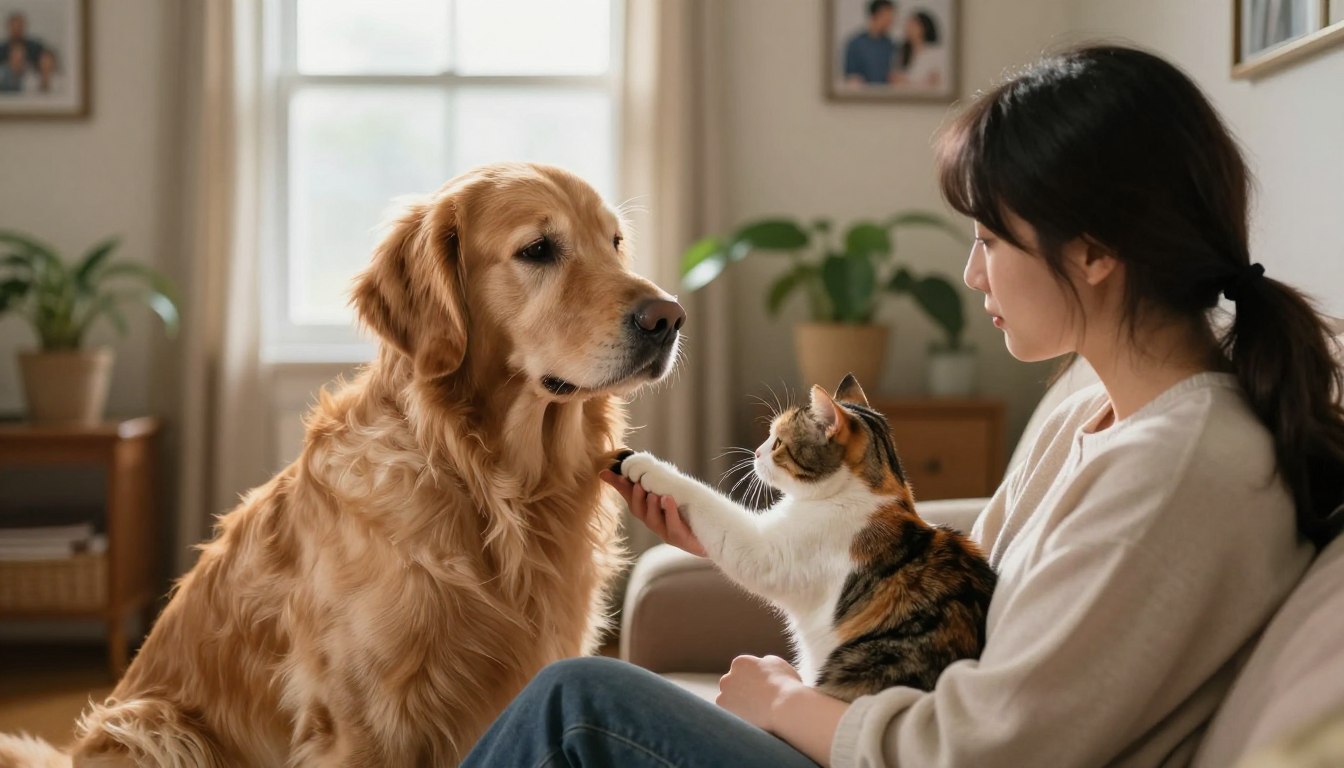
Our furry friends often seem to know exactly how we’re feeling, don’t they? Whether we’re experiencing joy or sadness, our pets are often right by our side, sensing our emotional state. But have you ever wondered how they do it?
It’s not just a matter of intuition; our pets are actually picking up on various cues, including our tone of voice, facial expressions, body language, and even changes in our scent. This remarkable ability allows them to form a deep emotional connection with us, providing comfort and companionship when we need it most.
Key Takeaways
- Pets can sense their owner’s emotional state through various cues.
- Tone of voice, facial expressions, and body language are key indicators.
- Changes in scent can also be detected by pets.
- The emotional connection between pets and their owners is deep and multifaceted.
- Pets provide comfort and companionship in times of need.
The Science Behind Animal Emotional Intelligence
Understanding how pets sense human emotions requires a dive into the realm of animal emotional intelligence. This complex trait enables pets to perceive and react to human feelings, fostering a deep bond between humans and animals.
The Evolutionary Advantage of Emotional Perception
Emotional perception in pets has evolved as a vital survival mechanism. By sensing human emotions, pets can better navigate their social environment, responding appropriately to cues like anger or affection. This ability enhances their interaction with humans, potentially leading to stronger bonds and improved cohabitation.
Research Breakthroughs in Animal Cognition
Recent studies in animal cognition have significantly advanced our understanding of pets’ emotional intelligence. Research has shown that many animals, particularly dogs and cats, possess advanced emotional recognition capabilities. These breakthroughs highlight the sophisticated ways pets interpret human emotional signals.
The Biological Basis for Emotional Connection
The biological underpinnings of the human-pet emotional connection involve complex neurological and hormonal processes. In pets, certain brain regions are dedicated to processing emotional information, while hormonal changes can influence their emotional states. Understanding these biological mechanisms provides insight into why pets are so attuned to human emotions.
By exploring the science behind animal emotional intelligence, we gain a deeper appreciation for the intricate relationships between humans and pets. This understanding can help strengthen the bond between species, promoting a more empathetic and supportive environment for both humans and animals.
How Pets Sense Human Emotions Through Vocal Cues
Pets have an uncanny ability to sense their owner’s emotions, and one of the primary ways they do this is through vocal cues. Our pets are incredibly attuned to the way we speak, picking up on subtle changes in our tone and pitch that can signal our emotional state. This empathetic ability allows them to respond in a way that’s comforting or appropriate to our feelings.
Decoding Emotional Changes in Voice Tone and Pitch
When we’re happy, our voice tends to be higher and more upbeat. Conversely, when we’re sad or distressed, our voice often becomes lower and more subdued. Pets can decode these emotional changes in our voice, allowing them to understand how we’re feeling. Research has shown that animals are capable of distinguishing between different emotional tones in human speech, responding accordingly.
For instance, a study found that dogs could differentiate between happy and angry voices, adjusting their behaviour based on the tone they heard. This ability isn’t limited to dogs; many pets can pick up on vocal cues that help them navigate their human’s emotional landscape.
https://www.youtube.com/watch?v=07Juz_La_cY
Dogs’ Remarkable Sensitivity to Human Speech
Dogs are particularly noted for their sensitivity to human speech. They can pick up on a wide range of emotional cues, from the soothing tones of a calm voice to the sharp edges of an angry one. This sensitivity is part of what makes dogs such effective companions, as they can often be seen responding to their owner’s emotional state with comforting behaviours.
As Dr. Brian Hare, a renowned expert in canine cognition, notes, “Dogs are incredibly attuned to human emotions, and their ability to read our vocal cues is a key part of this.” This attunement allows dogs to form strong bonds with their owners, providing emotional support when it’s needed.
How Cats, Birds, and Other Pets Respond to Vocal Emotions
While dogs are often highlighted for their emotional sensitivity, other pets also respond to vocal emotions. Cats, for example, may not be as overtly demonstrative as dogs, but they too can pick up on the emotional tone of their owner’s voice. A soothing voice can calm a stressed cat, while a harsh tone can cause them distress.
Birds and other pets also respond to vocal cues, adjusting their behaviour based on the emotional content of their owner’s speech. This universal ability across different species underscores the deep emotional connection that can exist between humans and their pets.
The Visual Connection: Pets Reading Human Facial Expressions
Pets have an incredible ability to read human facial expressions, which plays a significant role in their emotional intelligence. This visual connection allows them to better understand their owner’s emotional state and respond accordingly. By interpreting facial cues, pets can provide comfort when we’re upset or give space when we’re happy.
The Science of Facial Recognition in Animals
Research has shown that many animals, particularly mammals and birds, possess the ability to recognise and interpret human facial expressions. Studies have identified specific brain regions in dogs and other animals that are dedicated to processing facial information. This neural machinery enables pets to differentiate between various emotional states, such as happiness, sadness, or anger.
Dogs: Masters of Human Expression Recognition
Dogs are renowned for their ability to read human facial expressions, often responding appropriately to their owner’s emotional state. They can distinguish between a smile and a frown, adjusting their behaviour accordingly. This skill is likely linked to their evolution as social animals, living alongside humans for thousands of years.
How Other Pets Interpret Our Facial Cues
While dogs are exceptional, other pets also possess the ability to interpret human facial expressions. Cats, for example, can recognise their owner’s emotional state and adjust their behaviour. Birds, too, have been observed responding to human facial cues, often changing their behaviour in response to their owner’s emotions.
Understanding how pets interpret our facial expressions can deepen our appreciation for the complex emotional bond between humans and animals. By recognising the visual cues that pets use to sense our emotions, we can better communicate with them and strengthen our relationship.
Body Language: Your Pet’s Window to Your Emotional State
Our pets are constantly observing us, and one of the key ways they understand our emotions is by interpreting our body language. This ability allows them to form a deeper emotional connection with us, responding in ways that are both comforting and supportive.

How Pets Interpret Human Posture and Movement
When we’re feeling stressed or anxious, our posture and movement change. We might slouch, move more erratically, or become more rigid. Pets are highly attuned to these changes, using them to gauge our emotional state. For instance, a dog might notice when we’re slouching and respond by nuzzling or staying closer to us.
Subtle Body Language Signals That Pets Notice
Pets are adept at picking up on subtle body language cues that we might not even be aware of. These can include changes in our gait, the way we hold our arms, or even the tension in our shoulders. By noticing these cues, pets can sense when we’re feeling down or upset, often responding with comforting behaviours.
Species-Specific Responses to Human Body Language
Different species respond to human body language in unique ways. Dogs, for example, are highly attuned to their owners’ postures and movements, often mirroring their emotional state. Cats, while sometimes more aloof, also respond to body language, though their responses might be more subtle. Understanding these species-specific responses can help us better appreciate how our pets sense and react to our emotions.
By recognising how pets interpret our body language, we can strengthen our emotional bond with them. This understanding fosters a more empathetic and supportive relationship, enhancing the overall well-being of both pets and their owners.
Pets Sense Human Emotions Through Scent Changes
Pets have an extraordinary capacity to pick up on our emotional cues, with their sense of smell playing a crucial role in this empathetic connection. The ability of pets, especially dogs, to detect emotional changes through scent is a fascinating area of study that sheds light on the deep bond between humans and animals.
The Chemistry of Emotions: How Feelings Change Our Scent
When we experience different emotions, our body chemistry changes. This includes the release of various hormones and neurotransmitters that can alter our scent. For instance, when we’re stressed or anxious, our body releases adrenaline, which can change our sweat composition. Pets, with their highly developed sense of smell, can detect these subtle changes in our scent, allowing them to sense our emotional state.
Research has shown that dogs can detect the chemical changes associated with human emotions. A study found that dogs could identify human stress sweat and were more likely to be cautious around people emitting stress odors. This indicates that the chemical changes in our scent can convey emotional information to our pets.
“The dog’s nose is a highly sophisticated tool that can detect subtle changes in human scent, reflecting our emotional state.”
Dogs’ Extraordinary Olfactory Emotional Detection
Dogs are renowned for their incredible olfactory abilities, and their capacity to detect emotional changes through scent is no exception. Studies have demonstrated that dogs can differentiate between human emotional states based on scent alone. This is attributed to their highly developed olfactory system, which includes up to 300 million olfactory receptors compared to only 6 million in humans.
Their ability to detect emotional changes can lead to comforting behaviours when their owners are stressed or anxious. For example, a dog might nuzzle or lick its owner to provide comfort, demonstrating an empathetic response to the detected emotional state.
| Emotional State | Chemical Change | Pet Response |
|---|---|---|
| Stress/Anxiety | Adrenaline release, altered sweat composition | Comforting behaviours (nuzzling, licking) |
| Fear | Cortisol release, specific pheromones | Protective or cautious behaviour |
| Happiness | Endorphin release, relaxed body chemistry | Playful or affectionate behaviour |
How Other Pets Use Scent to Read Emotions
While dogs are the most studied in terms of olfactory emotional detection, other pets also use scent to understand human emotions. Cats, for example, have a highly developed sense of smell and can detect changes in their owner’s scent. They may not respond as overtly as dogs, but they can become more affectionate or withdrawn based on their owner’s emotional state.
Other animals, like horses and even some birds, have been observed to be sensitive to human emotions, potentially using scent as one of the cues. The extent to which these animals rely on scent can vary, but it’s clear that many pets have some capacity to detect and respond to human emotional changes through olfactory cues.
Why Your Pet Comforts You During Emotional Distress
Pets have a remarkable ability to detect human emotional distress and respond with comforting behaviour. This phenomenon is rooted in the deep emotional bond between humans and pets, which has been cultivated over thousands of years of companionship.

The Instinctual Response to Human Sadness and Anxiety
When humans experience sadness or anxiety, pets often react instinctively. Dogs, for example, may nuzzle or lick their owners to provide comfort, while cats may rub against their owners or purr to calm them down. This instinctual response is believed to be linked to the pack dynamics of many animal species, where comforting behavior is a way of strengthening social bonds within the group.
Key aspects of instinctual response include:
- Recognizing emotional cues
- Responding with comforting behavior
- Strengthening social bonds
Empathy vs. Learned Behavior in Pet Comfort Responses
The debate surrounding whether pets’ comfort responses are driven by empathy or learned behavior is ongoing. Some researchers argue that pets are capable of empathy, allowing them to understand and respond to human emotions. Others suggest that pets learn to comfort their owners through repeated interactions and reinforcement.
| Aspect | Empathy | Learned Behavior |
|---|---|---|
| Nature of Response | Instinctual understanding of emotions | Conditioned response to owner’s behavior |
| Role of Experience | Less dependent on experience | Heavily influenced by experience |
| Examples | Dogs comforting crying owners | Pets learning to sit beside anxious owners |
The Healing Power of Pet Comfort During Difficult Times
The comfort provided by pets during emotional distress can have a significant healing effect. Studies have shown that interacting with pets can reduce stress levels, lower blood pressure, and improve overall mental well-being. The emotional support offered by pets can be particularly valuable during difficult times, such as grieving the loss of a loved one or coping with mental health issues.
The therapeutic benefits of pet comfort include:
- Reduced stress and anxiety
- Improved mood
- Enhanced emotional resilience
Strengthening the Human-Pet Bond Through Emotional Awareness
Emotional awareness is the cornerstone of a strong human-pet bond, fostering a deeper connection between you and your pet. By understanding and responding to your pet’s emotional needs, you can create a more empathetic and supportive environment.
Building Trust Through Mutual Emotional Understanding
Mutual emotional understanding is crucial in building trust between you and your pet. When you recognize and respond to your pet’s emotions, you demonstrate empathy and care, strengthening your bond. This understanding can be developed through observation and interaction, allowing you to better anticipate your pet’s needs and behaviors.
Key indicators of emotional understanding include:
- Recognizing changes in your pet’s body language
- Responding to vocal cues and emotional expressions
- Being aware of your pet’s preferences and aversions
Training Techniques for Enhanced Emotional Communication
Training techniques that focus on emotional communication can significantly enhance your relationship with your pet. By using positive reinforcement methods, you can encourage your pet to express their needs and emotions more effectively.
Effective training techniques include:
- Rewarding calm behavior
- Using clicker training to reinforce desired actions
- Encouraging socialization to help your pet become more confident
Creating an Emotionally Responsive Environment
Creating an environment that is responsive to your pet’s emotional needs is vital for their well-being and your bond. This involves being mindful of your pet’s stressors and comforts, and adjusting your home environment accordingly.
Tips for creating an emotionally responsive environment:
- Provide a safe space for your pet to retreat to when stressed
- Maintain a consistent routine to reduce anxiety
- Use positive reinforcement to encourage calm behaviour
Remarkable Stories of Emotional Connection Between Humans and Pets
From service animals to therapy pets, the emotional connection between humans and animals is a powerful force that can have a profound impact on our well-being. This connection is built on the ability of pets to sense and respond to human emotions, often providing comfort and support in times of need.
Service Animals: Trained Emotional Detectors
Service animals, such as guide dogs for the visually impaired, are trained to detect and respond to their owner’s emotional state. These animals undergo rigorous training to learn how to provide support and comfort, often sensing changes in their owner’s emotions before they are even verbalised.
Therapy Pets: Healing Through Emotional Connection
Therapy pets visit hospitals, nursing homes, and other settings to provide emotional comfort and support to individuals in need. These pets are often certified through specialised programs and are trained to be calm and gentle in a variety of environments, making them ideal for providing emotional solace.
Everyday Heroes: Ordinary Pets with Extraordinary Perception
Not all pets are trained as service or therapy animals, yet they still demonstrate an extraordinary ability to sense and respond to their owner’s emotions. Many pet owners have shared stories of their pets providing comfort during difficult times, showcasing the deep emotional bond that can exist between humans and animals.
Conclusion: The Profound and Mysterious Bond We Share With Our Animal Companions
The connection between humans and pets is a complex and multifaceted one, with pets demonstrating an uncanny ability to sense human emotions. Through their emotional intelligence, pets can pick up on subtle cues, from vocal changes to body language and even scent, allowing them to respond with empathy and comfort.
This animal empathy is not just a product of their evolution alongside humans but also a testament to their ability to form deep, meaningful bonds with their human companions. As we’ve explored, pets use various methods to understand human emotions, from recognising facial expressions to detecting changes in our voice tone and pitch.
The significance of this emotional connection cannot be overstated. It enriches the lives of both humans and pets, fostering a deeper understanding and trust between species. By acknowledging and nurturing this bond, we can strengthen our relationships with our pets, creating a more emotionally responsive environment that benefits both parties.
Ultimately, the bond we share with our pets is a profound and mysterious one, filled with moments of comfort, companionship, and joy. As we continue to explore and understand the intricacies of pets’ sense of human emotions and their emotional intelligence, we can deepen our appreciation for the unique role pets play in our lives.