
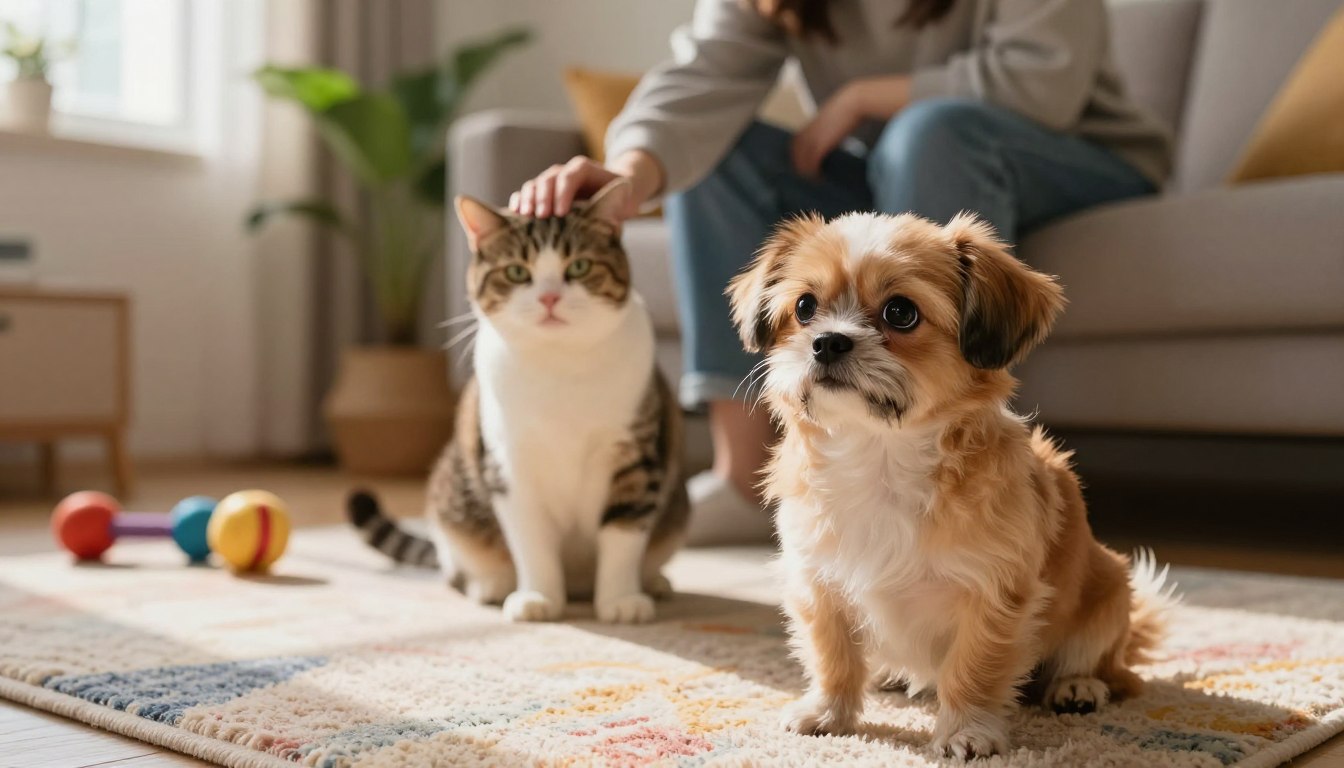
Have you ever noticed your furry friend pushing between you and someone else? You’re not alone. Many pet owners have observed this behaviour, and it’s not just a coincidence. Science suggests that animals can indeed feel jealousy.
Studies have shown that pets exhibit behaviours that resemble jealousy when they feel threatened by a potential rival for their owner’s attention. This can manifest in various ways, such as pushing, whining, or even aggression.
The idea that pets can feel complex emotions like jealousy is supported by research in animal behaviour and psychology.
Key Takeaways
- Pets exhibit behaviours that resemble jealousy when they feel threatened by a rival for attention.
- Research supports the idea that animals can feel complex emotions like jealousy.
- Pet owners have observed behaviours that suggest their pets are capable of feeling jealous.
- Jealousy in pets can manifest in various ways, including pushing, whining, or aggression.
- Science is shedding light on the emotional lives of our furry companions.
The Science Behind Pet Jealousy
Understanding jealousy in animals requires delving into the complex emotional lives of pets, a topic that has become increasingly prominent in scientific research. The study of animal emotions has evolved significantly over the years, from early anecdotal observations to rigorous scientific investigations.
Early Research on Animal Emotions
Early studies on animal emotions were often based on anecdotal evidence and lacked the rigour of modern scientific methods. However, these initial observations laid the groundwork for more systematic research into the emotional lives of animals, including the phenomenon of jealousy.
Recent Scientific Studies on Pet Jealousy
Recent years have seen a surge in scientific studies aimed at understanding jealous behaviour in pets. For instance, a study conducted at the University of California, San Diego, found that dogs exhibited behaviours consistent with jealousy when they perceived their owners interacting with a potential rival.
The Cognitive Abilities Required for Jealousy
Jealousy is a complex emotion that requires certain cognitive abilities, including the capacity to form attachments and to perceive potential threats to those attachments. Research has shown that pets, particularly dogs, possess these cognitive abilities, which may explain why they often display jealous behaviours.
By understanding the cognitive underpinnings of jealousy, we can better appreciate why our pets behave in seemingly jealous ways and how we can manage these behaviours effectively.
Do Pets Feel Jealous? Understanding the Evidence
While we can’t directly ask our pets how they feel, scientific studies have given us a glimpse into their emotional lives, particularly regarding jealousy. The evidence supporting jealousy in pets comes from various studies across different species.
The 2014 UC San Diego Study on Dogs
A notable study conducted in 2014 at the University of California, San Diego, explored jealousy in dogs. The researchers found that dogs exhibited behaviours consistent with jealousy when they perceived their owners interacting with a potential rival. This study provided significant insights into canine emotions and supported the idea that dogs are capable of feeling jealous.
Research on Primates and Jealousy
Research on primates has also shed light on jealousy in animals. Studies have shown that primates display behaviours that resemble jealousy, such as aggression or withdrawal, when they perceive a threat to their social bonds or resources. These findings suggest that the capacity for jealousy is not unique to humans or dogs but is present in other species as well.
Neurological Evidence of Jealousy in Animals
Neurological studies have further supported the existence of jealousy in animals. Research has identified brain regions associated with emotional responses, including jealousy, in various species. For instance, studies have shown that certain areas of the brain are activated when animals experience social exclusion or perceive a threat to their relationships.
The following table summarises key findings from studies on jealousy in different species:
| Species | Observed Behavior | Study Findings |
|---|---|---|
| Dogs | Aggression, attention-seeking | 2014 UC San Diego study showed that dogs exhibit jealous behaviour |
| Primates | Aggression, withdrawal | Studies indicate primates display jealousy-like behaviours |
| Various Species | Brain region activation | Neurological evidence supports the existence of jealousy |
These studies collectively provide strong evidence that pets, including dogs and other animals, are capable of feeling jealousy. Understanding these emotions can help pet owners better manage their pets’ behaviours and strengthen their bonds with them.
Which Animals Show Jealous Behaviours?
While often associated with human emotions, jealousy is also observed in various animal species, including common household pets. This complex emotion manifests differently across various species, providing insights into the evolutionary roots of jealousy.
Dogs: The Most Studied Example
Dogs are among the most studied animals when it comes to jealousy. Research has shown that dogs exhibit jealous behaviours when they perceive their owner’s attention is being diverted to another pet or even an inanimate object. A study conducted by the University of California, San Diego, found that dogs displayed jealous behaviours even when they merely imagined their owner interacting with a rival.
“Dogs can sense when they’re being left out or when someone or something else is getting the attention they feel is rightfully theirs.” This behaviour is often characterised by attempts to intervene between their owner and the perceived rival, whining, or even aggressive behaviour.
Cats and Their Subtle Signs of Jealousy
Cats also exhibit jealous behaviours, although their signs are often more subtle than those of dogs. Cats may display jealousy by becoming more clingy, vocalising more than usual, or even exhibiting aggressive behaviour towards the perceived rival. They might also engage in urine marking or scratching furniture to assert their dominance.
Birds, Horses, and Other Pets
Jealousy is not limited to dogs and cats; other pets like birds and horses also show signs of jealousy. For instance, birds may become more vocal or aggressive when they see their owner giving attention to another pet. Horses have been observed displaying jealous behaviours, such as pushing their way between their owner and other horses.
Coping with pet jealousy requires understanding the underlying causes and implementing strategies to manage these behaviours. By recognising the signs of jealousy in different pets, owners can take steps to reassure their pets and maintain a harmonious household.
Common Triggers of Pet Jealousy
Pet owners often wonder what triggers jealousy in their pets. The introduction of new elements into a pet’s life can often lead to feelings of jealousy. Understanding these triggers is key to managing and mitigating jealous behaviour.
New Pets in the Household
One of the most common triggers of pet jealousy is the introduction of a new pet into the household. This can lead to feelings of competition for resources and attention. To minimize jealousy, it’s essential to introduce new pets gradually and ensure that the existing pet continues to receive adequate attention and affection.
New Partners or Family Members
Changes in family dynamics, such as a new partner or family member moving in, can also trigger jealousy in pets. Pets may feel that they are losing their place in the family or that their routine is being disrupted. Maintaining a consistent routine and providing reassurance can help alleviate these feelings.
Babies and Children
The arrival of a new baby or child can be particularly challenging for pets. Pets may feel jealous of the attention given to the new addition, leading to behavioural changes. It’s crucial to continue providing pets with attention and to involve them positively in interactions with the new baby or child.
Changes in Attention and Routine
Any significant change in a pet’s routine or the attention they receive can trigger jealousy. This could be due to a change in work schedule, travel, or simply a shift in how attention is distributed among family members. Maintaining a consistent routine and ensuring that pets receive quality time can help mitigate feelings of jealousy.
Signs Your Pet Is Experiencing Jealousy
Jealousy in pets manifests in different ways, and understanding these signs is crucial for pet owners. Recognising the behaviours associated with jealousy can help you address the issue and strengthen your bond with your pet.
Attention-Seeking Behaviors
One of the most common signs of jealousy in pets is attention-seeking behaviour. This can include whining, barking, or pawing at you when you’re interacting with another pet or person. Your pet may also try to intervene between you and the object of their jealousy, such as nudging or pushing their way into the interaction.
For example, if you’ve recently introduced a new pet into your home, your existing pet might become clingy or demanding of your attention. They may follow you around the house or insist on being close to you at all times.
Aggressive or Defensive Actions
In some cases, jealous pets may exhibit aggressive or defensive behaviours. This can range from growling or hissing at the perceived rival to more severe actions like biting or attacking. These behaviours are often a sign that your pet feels threatened or insecure about their position in the household.
Withdrawal and Depression
Not all pets react to jealousy with aggression; some may become withdrawn or depressed. If your pet is feeling jealous, they might stop engaging in activities they once enjoyed or become less responsive to you. This withdrawal can be a sign that your pet is feeling anxious or insecure.
In some cases, pets may even exhibit changes in appetite or sleep patterns due to their emotional distress. It’s essential to recognise these signs and take steps to reassure your pet.
Territorial Marking and Other Stress Signals
Some pets may exhibit territorial marking behaviours when they feel jealous, such as urinating or defecating in inappropriate areas. This behaviour is a way for your pet to claim their territory and assert their presence.
Other stress signals can include excessive grooming, pacing, or other anxious behaviours. By recognising these signs, you can take steps to alleviate your pet’s jealousy and reduce their stress.
Understanding the signs of jealousy in pets is the first step in addressing the issue. By recognising these behaviours and taking appropriate action, you can help your pet feel more secure and reduce the likelihood of problematic jealousy.
The Evolutionary Purpose of Jealousy in Animals
Understanding the evolutionary purpose of jealousy in animals requires a dive into their survival and social behaviours. Jealousy, as observed in pets and other animals, is not merely a complex emotion but a vital mechanism that has evolved over time.
Resource Protection and Survival
In the wild, resources such as food, shelter, and potential mates are scarce. Jealousy can be seen as a protective mechanism that ensures an individual animal’s access to these resources. For instance, a dog might display jealousy when it perceives a threat to its food or attention from its owners. This behaviour is rooted in the instinct to survive and thrive in a competitive environment.
Social Bonding and Pack Dynamics
Jealousy also plays a role in the social dynamics of animal groups. In pack animals like wolves or dogs, jealousy can manifest as a response to perceived threats to social bonds or hierarchy within the group. This emotion helps maintain the social structure and ensures that the group remains cohesive. For example, a dominant animal may exhibit jealousy when a subordinate interacts with a new member, potentially disrupting the established order.
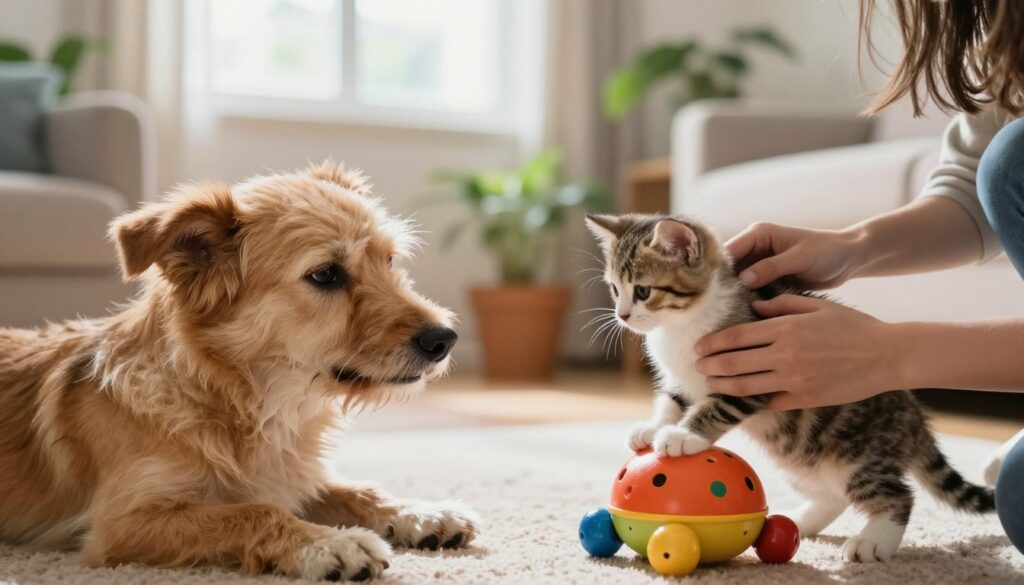
Differences Between Human and Animal Jealousy
While the fundamental drivers of jealousy may be similar across humans and animals, there are significant differences in how this emotion is experienced and expressed. Human jealousy is often intertwined with complex cognitive processes and societal norms, whereas animal jealousy is more directly linked to instinct and survival needs. Recognising these differences is crucial for understanding jealousy in animals and managing jealous behaviour in pets effectively.
By examining the evolutionary roots of jealousy, we gain insights into the behaviours of our pets and the importance of addressing their emotional needs. This understanding can lead to better strategies for managing jealous behaviours and fostering a more harmonious household.
Healthy Ways to Manage Jealous Behaviour in Pets
By adopting a few healthy habits, pet owners can significantly reduce their pet’s jealous behaviour. Managing jealousy in pets is not just about addressing the symptoms, but also about understanding and mitigating the underlying causes.
Maintaining Routines and Reassurance
One of the most effective ways to manage jealous behaviour is by maintaining a consistent routine. Pets thrive on predictability, and a regular schedule for feeding, exercise, and play can provide a sense of security. “Consistency is key when it comes to reducing anxiety and jealousy in pets,” says Dr Sophia Yin, a renowned animal behaviourist. Reassuring your pet through gentle interactions and positive reinforcement can also help alleviate feelings of jealousy.
Positive Reinforcement Techniques
Positive reinforcement is a powerful tool in managing pet jealousy. By rewarding your pet for calm behaviour, you can encourage positive associations and reduce jealous reactions. This can be achieved through treats, praise, and affection when your pet remains calm in situations that might otherwise trigger jealousy.
Gradual Introduction Strategies
When introducing a new pet or family member, it’s essential to do so gradually. This allows your pet to adjust to the new presence without feeling overwhelmed or threatened. Gradual introduction helps in preventing the development of jealous behaviours.
Creating Positive Associations
Creating positive associations is a crucial part of gradual introduction strategies. By associating the new presence with positive experiences, such as treats and praise, you can help your pet develop a more favourable attitude towards the newcomer. This can significantly reduce jealous behaviour and promote a harmonious household.
Implementing these strategies requires patience and consistency, but the results can be transformative. By understanding and addressing your pet’s jealousy, you can strengthen your bond and create a more peaceful home environment.
When to Seek Professional Help for Pet Jealousy
Understanding the threshold between normal and problematic jealousy in pets is essential for their well-being. While a certain level of jealousy can be considered normal, especially in multi-pet households, there are instances where professional help is necessary to ensure the mental and emotional health of your pets.
Distinguishing Between Normal and Problematic Jealousy
Normal jealousy in pets might manifest as occasional attention-seeking behaviour or mild aggression. However, when this behaviour escalates into persistent aggression, destructive actions, or significant distress, it’s a sign that professional intervention is needed.
| Behavior Type | Normal Jealousy | Problematic Jealousy |
|---|---|---|
| Attention-Seeking | Mild, occasional | Frequent, demanding |
| Aggression | Mild growling | Severe biting, hissing |
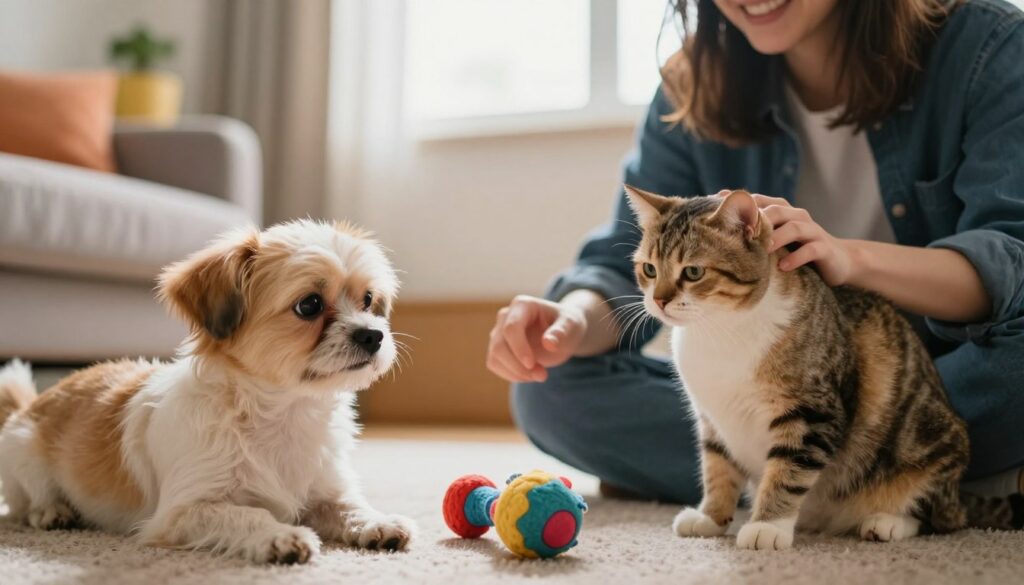
Working with Animal Behaviourists
Animal behaviourists are professionals trained to understand and address behavioural issues in pets. They can provide tailored advice and strategies to manage jealous behaviour in pets.
Medical Considerations and Anxiety Treatments
Sometimes, jealousy can be a symptom of underlying medical issues or anxiety disorders. Consulting with a veterinarian is crucial to rule out any health-related causes.
By seeking professional help when needed, pet owners can ensure their pets lead happier, healthier lives.
Conclusion: Understanding and Nurturing Our Pets’ Emotional Lives
Understanding whether pets feel jealous is crucial for building a stronger, more empathetic relationship with them. The evidence suggests that pets do experience jealousy, driven by a complex mix of cognitive and emotional processes. By recognising the signs of jealousy, such as attention-seeking behaviours or withdrawal, pet owners can take steps to manage these feelings.
Understanding jealousy in animals allows us to provide a more nurturing environment. Simple actions, like maintaining routines and using positive reinforcement techniques, can significantly reduce jealous behaviours. For pets that exhibit extreme jealousy, seeking professional help from animal behaviourists can provide tailored strategies to address these issues.
By acknowledging and addressing our pets’ emotional needs, we can foster a more harmonious and loving home. This not only improves our pets’ well-being but also strengthens the bond between pets and their owners. As we continue to learn more about the emotional lives of animals, we can develop more effective ways to support them, ensuring a happier, healthier life for our beloved companions.