
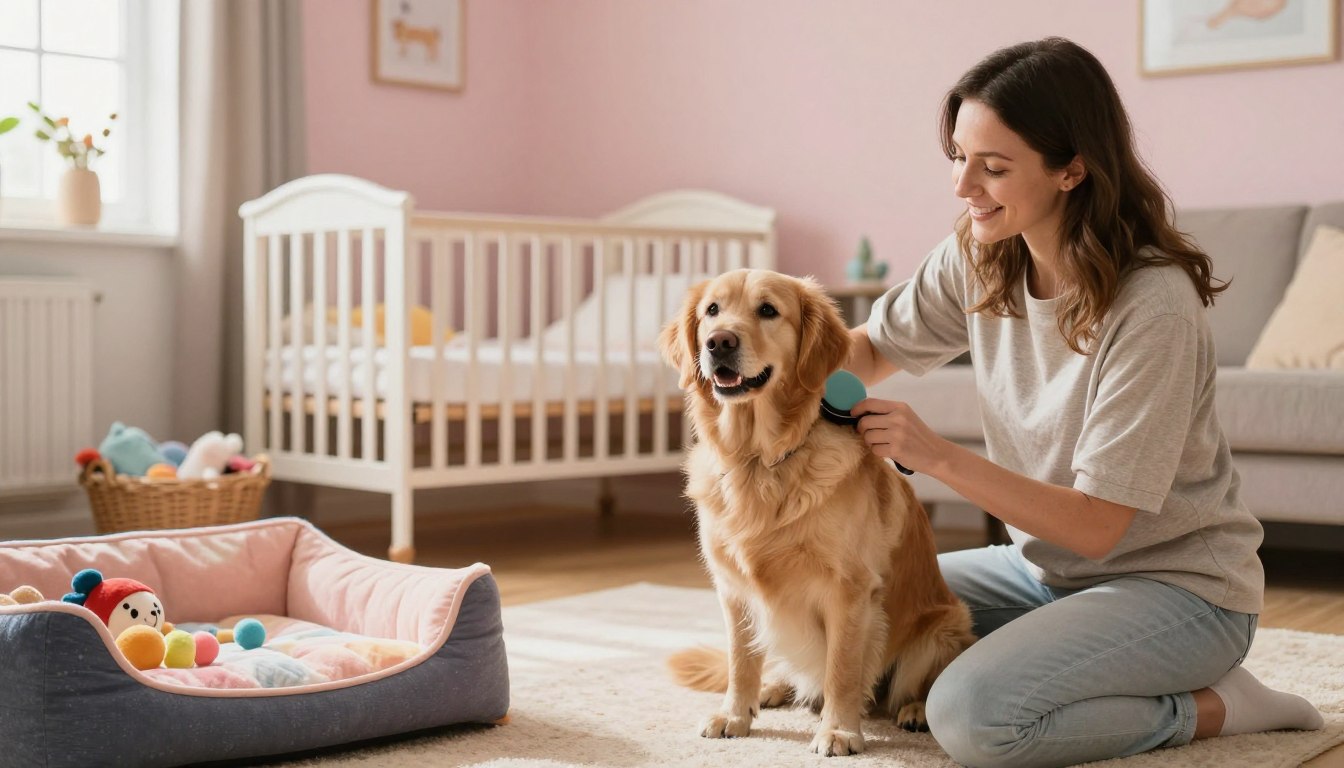
Welcoming a new baby into your family can be a significant change for both you and your pet. To ensure a smooth transition, it’s essential to prepare your pet in advance.
Gradual introductions, adjustments to routines, and familiarizing your pet with the baby’s scent can make a big difference. By following a few simple steps, you can create a welcoming environment for both your pet and your baby, promoting a healthy and happy relationship between them.
Safety rules and emotional reassurance are also crucial in helping your pet adapt to the new addition. With patience and careful planning, you can help your pet feel comfortable and secure with the new baby.
Key Takeaways
- Gradually introduce your pet to the baby’s presence
- Adjust your pet’s routine to accommodate the new baby
- Familiarize your pet with the baby’s scent
- Establish safety rules for interactions between pet and baby
- Provide emotional reassurance to your pet during this transition
Understanding Your Pet’s Perspective
As a pet owner, it’s essential to consider your pet’s perspective when introducing a new baby to the family. Pets often perceive the arrival of a new baby as a significant life change, which can lead to stress and anxiety.
How Pets Perceive Major Life Changes
Pets are highly attuned to their surroundings, and changes in their environment can cause them significant distress. The arrival of a new baby brings new sounds, smells, and routines that can be overwhelming for pets.
Why Preparation Matters for Pet Well-being
Understanding your pet’s perspective is vital to ensure their well-being. By recognizing the signs of stress and taking proactive steps, you can help your pet adjust to the new addition. Preparation is key to minimizing the disruption and creating a stable environment for your pet.
| Signs of Stress in Pets | Preparation Strategies |
|---|---|
| Pacing, panting, or restlessness | Gradual introduction to baby items and sounds |
| Changes in appetite or sleep patterns | Maintaining a consistent routine |
| Increased barking or vocalization | Training your pet to respond to calm commands |
By understanding your pet’s perspective and taking steps to prepare them for the new baby, you can create a harmonious and safe environment for both your pet and your new family member.
When to Begin Preparation
The key to a smooth transition for your pet when a new baby arrives lies in the preparation timeline. Starting early allows you to address any behavioral issues and make necessary adjustments to your pet’s routine, ensuring a smoother transition when the baby arrives.
Ideal Timeline: Months Before Baby’s Arrival
It’s recommended to start preparing your pet at least a few months before the baby’s arrival. This timeframe gives you the opportunity to gradually introduce changes to your pet’s environment and routine, helping them adjust to the new addition.
Different Timeframes for Dogs vs. Cats
The ideal preparation period varies depending on whether you have a dog or a cat. For dogs, it’s advisable to begin preparation 3-4 months in advance, as they often require more training and adjustment to new routines. In contrast, cats typically require a shorter preparation period, with 1-2 months being sufficient. This difference is due to the generally more independent nature of cats and their slower response to changes in their environment.
By understanding the specific needs of your pet and starting the preparation process at the right time, you can ensure a more harmonious introduction between your pet and the new baby, making the transition less stressful for both.
Assessing Your Pet’s Current Behaviour
Assessing your pet’s behaviour is the first step in ensuring a harmonious household with a new baby. By understanding your pet’s current behaviour, you can identify potential issues that may arise when the baby arrives, allowing you to take proactive measures to address these concerns.
Identifying Problematic Behaviours
It’s essential to recognise any problematic behaviours your pet may be exhibiting, such as aggression, fear, or anxiety. These behaviours can be triggered by various factors, including changes in the environment or routine. Common problematic behaviours include:
- Aggression towards people or other animals
- Fear-based behaviours, such as hiding or avoidance
- Separation anxiety or destructive behaviour when left alone
Recognising Anxiety Triggers
Understanding what triggers your pet’s anxiety is crucial in preparing them for the arrival of a new baby. Common anxiety triggers include loud noises, changes in routine, or new environments. By identifying these triggers, you can develop strategies to mitigate their impact.
Baseline Assessment Checklist
To effectively assess your pet’s behaviour, use the following checklist:
- Observe your pet’s behaviour in various situations.
- Note any changes in appetite, sleep patterns, or overall demeanour.
- Identify any triggers that cause anxiety or stress.
- Document your pet’s reactions to different stimuli.
By following this checklist, you can create a comprehensive picture of your pet’s behaviour and make informed decisions to ensure a smooth transition when the baby arrives.
How to Prepare Your Pet for a New Baby: First Steps
As you anticipate the arrival of your new baby, it’s essential to start preparing your pet for this significant change. Preparing your pet involves several key steps that will help ensure a smooth transition for both your pet and the new family member.
Basic Commands Every Pet Should Know
One of the first steps in preparing your pet is to ensure they have a solid understanding of basic commands. Commands like “sit,” “stay,” and “leave it” can help you manage your pet’s behaviour around the baby. Consistent training is key to reinforcing these commands.
For example, teaching your pet to “stay” can help prevent it from jumping up or getting too close to the baby’s crib. You can start by having your pet sit, then taking a few steps back and rewarding them for remaining in position.
Creating Boundaries and “Baby-Free” Zones
Establishing boundaries is crucial for maintaining a safe and comfortable environment for both your pet and the baby. Designate certain areas as “baby-free” zones where your pet can retreat when they need some space. This could be a crate or a specific room.
Using baby gates or pet barriers can help you control access to certain areas of your home, ensuring your pet has a safe space.
Addressing Jumping, Barking, and Other Concerns
It’s also important to address any problematic behaviours your pet may exhibit, such as jumping up or excessive barking. Positive reinforcement training can help mitigate these behaviours.
| Behavior | Training Tip |
|---|---|
| Jumping Up | Ignore the behaviour and reward calmness |
| Excessive Barking | Desensitise to triggers and teach “quiet” command |
By addressing these concerns early on, you can create a more harmonious home environment for both your pet and your new baby.
Adjusting Your Pet’s Routine Gradually
As you prepare for the arrival of your new baby, it’s crucial to start making gradual changes to your pet’s routine. This helps your pet adjust to the upcoming changes and reduces the likelihood of stress or anxiety when the baby arrives. “A gradual transition is key to a harmonious household,” say pet behaviour experts.
Changing Walking and Feeding Schedules
One of the first steps in adjusting your pet’s routine is to modify their walking and feeding schedules. If your pet is used to being fed or taken out at specific times, start by shifting these times slightly. For example, if you normally feed your dog at 7 AM, try feeding them at 6:45 AM. This gradual change helps your pet get used to the new timing.
Reducing Attention Dependency
Pets that are overly dependent on attention from their owners might feel jealous or left out when the baby arrives. To mitigate this, start reducing the amount of attention you give your pet gradually. Encourage independent behaviour by spending time with your pet doing activities that don’t involve constant interaction, such as providing puzzle toys filled with treats.
Practice Sessions with a Baby Doll
Using a baby doll can be an effective way to prepare your pet for the new baby. Start by bringing the doll into your home and allowing your pet to become familiar with it. You can simulate baby noises and movements to help your pet get used to the sounds and activities associated with a baby. This practice helps your pet understand that the baby is a new member of the family and not a threat.
By implementing these gradual adjustments, you can help ensure a smoother transition for your pet when the baby arrives. Remember, the goal is to make the transition as seamless as possible for your pet, setting the stage for a happy and harmonious home for everyone.
Introducing Baby Items and Sounds
As you prepare your home for the new baby, it’s essential to introduce baby items and sounds to your pet gradually. This helps your pet become familiar with the new environment and reduces stress levels.
Familiarising Pets with Cribs, Strollers, and Swings
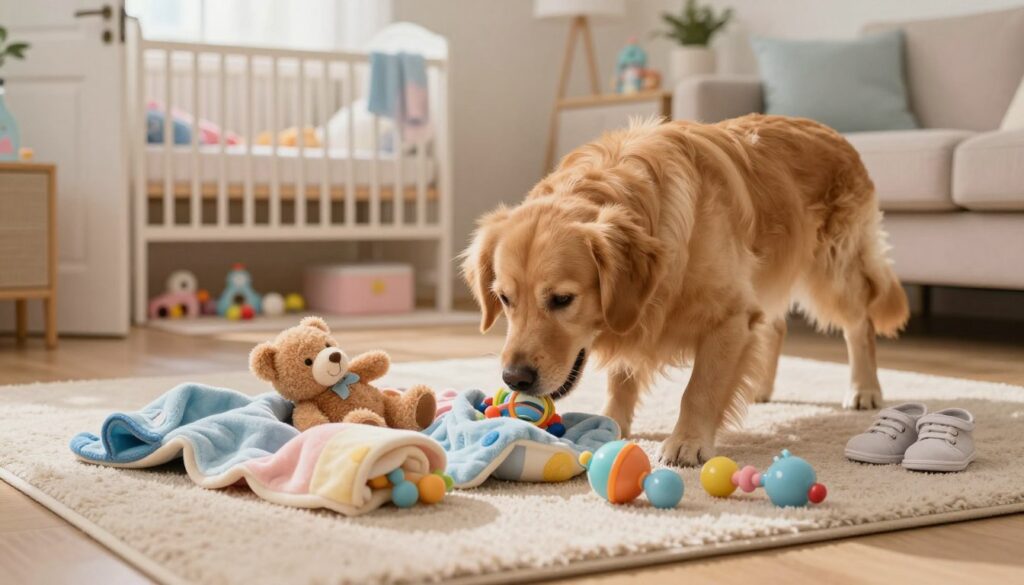
Start by bringing home baby items such as cribs, strollers, and swings before the baby arrives. Allow your pet to explore these items at their own pace, rewarding calm behaviour. This gradual introduction helps your pet view these items as non-threatening.
Desensitising to Crying and Other Baby Sounds
Baby sounds, including crying, cooing, and fussing, can be startling for pets. To desensitise your pet, play recordings of these sounds at a low volume, gradually increasing it over time. Reward your pet for remaining calm.
Creating Positive Associations with Baby Gear
To create positive associations, place treats or toys near the baby gear. This helps your pet associate the presence of baby items with positive experiences. Consistency is key to making your pet feel comfortable around baby gear.
By following these steps, you can help your pet adjust to the new baby and create a harmonious home environment.
Scent Familiarisation Techniques
Scent plays a crucial role in how pets perceive their environment, making scent familiarisation a key step in introducing a new baby. Pets have a highly developed sense of smell, and unfamiliar scents can cause anxiety or aggression. By familiarising your pet with the scent of your baby, you can reduce the likelihood of adverse reactions and create a more harmonious household.
Using Baby Lotions and Powders Around Your Pet
One effective method of scent familiarisation is to use baby lotions and powders around your pet. By applying these products to your pet or to surfaces they frequent, you can help them become accustomed to the new scents. Start using these products a few weeks before the baby arrives to give your pet ample time to adjust.
Bringing Home Baby’s Blanket Before Homecoming
Bringing home a blanket or piece of clothing that the baby has used before they arrive home is another effective way to familiarise your pet with the baby’s scent. Place the blanket in areas where your pet spends a lot of time, allowing them to investigate and become comfortable with the new scent.
Effective Scent-Swapping Methods
Scent-swapping involves exchanging scents between the baby and your pet to help them become familiar with each other. You can do this by stroking the baby and then stroking your pet, or by using a cloth to transfer scents between them. This method can be particularly effective in the days leading up to the baby’s homecoming.
By implementing these scent familiarisation techniques, you can significantly reduce your pet’s stress and anxiety when the new baby arrives, creating a smoother transition for the whole family.
Setting Up Safety Measures
Ensuring a safe environment for both your pet and new baby is crucial, and setting up safety measures is a vital step in this process. By taking proactive steps, you can significantly reduce the risk of conflicts between your pet and baby.
Physical Barriers and Management Tools
One of the most effective ways to ensure safety is by creating physical barriers between your pet and baby. This can include pet gates or baby gates that restrict access to certain areas. Additionally, using management tools like leashes or harnesses can help you control your pet’s movements when the baby is around.
Creating Safe Retreat Spaces for Your Pet
It’s equally important to provide your pet with a safe retreat space where they can escape from the baby’s noise and activity. This could be a quiet room or area where your pet can relax without being disturbed. Ensure this space is comfortable and familiar to your pet.
Emergency Plans and Precautions
Having an emergency plan in place is crucial. This includes knowing how to quickly separate your pet and baby if needed, and having a list of emergency contact numbers, such as your veterinarian. Being prepared can make a significant difference in case of an unexpected situation.
By implementing these safety measures, you can ease your pet’s transition with a new baby and create a more harmonious home environment. For more pet and baby introduction tips, consider consulting with a professional dog trainer or a veterinarian for personalised advice.
The Day Baby Comes Home
The moment you’ve been preparing for has finally arrived – the day your baby comes home. This is a significant event that requires careful planning to ensure a smooth transition for both your pet and your baby. A well-planned introduction is crucial for setting the tone for a harmonious household.
First Introduction Strategies
Before bringing your baby into the house, it’s a good idea to prepare a separate room for the baby. This allows your pet to become familiar with the baby’s sounds and smells without the stress of a face-to-face encounter. Keep the first introduction calm and controlled.
To facilitate a smooth introduction, consider the following steps:
- Keep the initial meeting brief.
- Monitor your pet’s body language closely.
- Reward calm behaviour with treats.
Managing the Initial Meeting
Managing the initial meeting between your pet and baby is critical. Ensure the environment is calm and free from distractions. It’s advisable to have another person assist you in holding the baby or managing your pet during this meeting.
| Action | Benefit |
|---|---|
| Keep the first meeting brief | Reduces stress for both pet and baby |
| Monitor body language | Helps in identifying signs of stress or aggression |
| Reward calm behaviour | Encourages positive interaction |
Reading Your Pet’s Body Language
Understanding your pet’s body language is vital during the introduction process. Signs of stress or anxiety in pets can include tail tucking, growling, or avoiding eye contact. Recognising these signs early can help you intervene before the situation escalates.
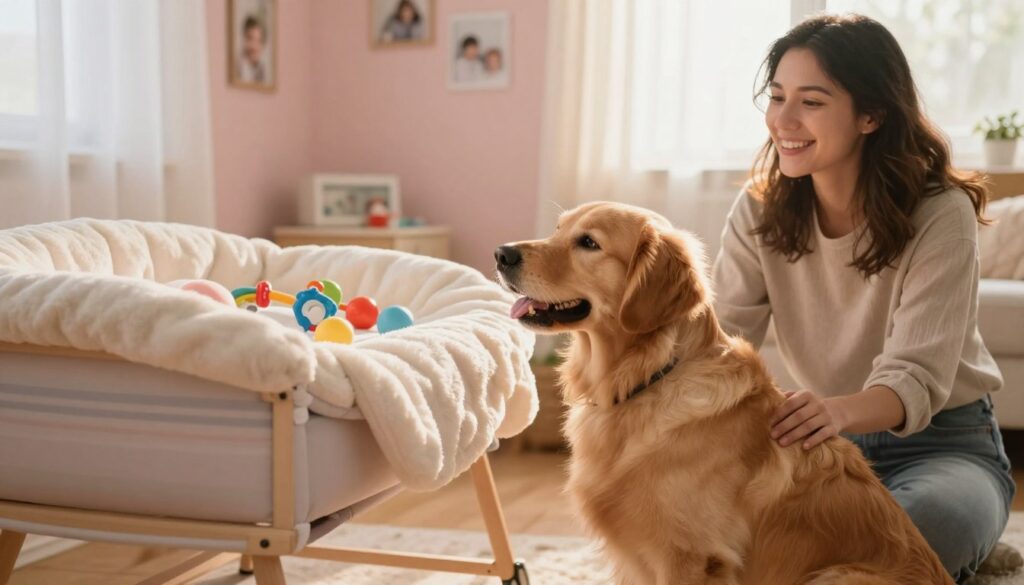
By being attentive to your pet’s needs and reactions, you can create a more peaceful coexistence between your pet and baby. Remember, patience and careful planning are key to a successful introduction.
Providing Emotional Reassurance
Emotional reassurance is crucial for pets as they adjust to the new addition to your family. The arrival of a new baby can be a significant change for pets, and providing emotional support is vital to ensure their well-being.
Maintaining Special Time with Your Pet
One way to provide emotional reassurance is by maintaining special time with your pet. Continue to spend quality time with your pet doing activities they enjoy. This can help them feel loved and secure despite the changes in the household.
Recognising Signs of Stress or Depression
It’s essential to recognise signs of stress or depression in your pet, such as changes in appetite, withdrawal, or increased anxiety. Early recognition allows you to take appropriate measures to comfort your pet.
Calming Techniques and Comfort Items
Using calming techniques and comfort items can also help. Calming aids like pheromone diffusers, calming treats, or a familiar blanket can provide comfort to your pet. Gentle petting and a soothing voice can also be very reassuring.
By maintaining special time, recognising signs of distress, and using calming techniques, you can help your pet feel more secure and loved as you welcome a new baby.
Troubleshooting Common Issues
The arrival of a new baby often brings about significant changes for your pet, and understanding how to troubleshoot common issues is crucial. As your family adjusts to the new addition, your pet may exhibit behaviours that range from mildly annoying to potentially problematic.
Addressing Jealousy and Attention-Seeking
One of the most common issues pet owners face is dealing with jealousy and attention-seeking behaviours. To mitigate these, it’s essential to maintain a consistent routine and ensure your pet receives adequate attention. Positive reinforcement training can help in redirecting your pet’s focus away from the baby and towards more desirable behaviours.
Managing Excessive Barking or Vocalisation
Excessive barking or vocalisation can be managed by identifying and addressing the underlying causes, such as anxiety or excitement. Desensitisation techniques can be effective in reducing your pet’s stress response to the baby’s presence.
When to Seek Professional Help
In some cases, professional help may be necessary to address persistent behavioural issues. Recognising the signs that indicate professional intervention is crucial.
Signs That Indicate Professional Intervention
- Aggression towards the baby or others
- Persistent fear or anxiety
- Destructive behavior
Finding the Right Behaviourist or Trainer
When seeking professional help, it’s crucial to find a qualified behaviourist or trainer. Look for certifications and experience in dealing with pet behavioural issues.
| Issue | Solution |
|---|---|
| Jealousy | Maintain a consistent routine, positive reinforcement training |
| Excessive Barking | Desensitisation techniques identify underlying causes |
| Aggression | Seek professional help, behaviour modification |
Conclusion
Preparing your pet for a new baby is a process that requires patience, understanding, and a well-planned approach. By following the steps outlined in this guide, you can create a welcoming environment for both your pet and your baby, promoting a healthy and happy relationship between them.
As you introduce your new baby to your pet, remember to maintain a consistent routine and provide emotional reassurance. This will help your pet adjust to the new addition and reduce stress. If you encounter any issues during this transition, don’t hesitate to seek professional help.
By taking the time to prepare your pet for a new baby, you’re setting the stage for a harmonious home where all family members can thrive. This thoughtful approach will help you build a strong, loving relationship between your pet and your new family member, making your home a happier place for everyone.