

Caring for a pet can be a transformative experience that not only enriches our lives but also teaches us valuable life skills. The act of nurturing and caring for another living being fosters a sense of responsibility and compassion that can extend beyond our relationships with our pets.
As we navigate the challenges and joys of pet parenting, we learn important lessons about consistency, unconditional love, and emotional intelligence. These experiences can shape our approach to human relationships and personal growth, helping us become more empathetic and mindful individuals.
Key Takeaways
- Caring for pets teaches responsibility and compassion.
- Pet parenting lessons promote emotional intelligence.
- Consistency and unconditional love are key takeaways from pet care.
- Pet parenting experiences can enhance human relationships.
- Lessons from pet care can foster personal growth.
The Wisdom We Gain From Our Furry Teachers
As we care for our pets, we unknowingly learn valuable lessons that can be applied to our own lives. The act of pet parenting is not just about providing for our animals; it’s a reciprocal relationship where both parties grow and learn together.
How Animals Become Our Greatest Mentors
Animals have a unique way of teaching us about responsibility, empathy, and compassion. Through their dependence on us, they show us the importance of reliability and consistency. For instance, a study published in the Journal of Veterinary Behavior found that children who participated in pet care activities developed higher levels of empathy and responsibility.
The Unexpected Parallels Between Pet Care and Human Development
Caring for pets mirrors many aspects of human development. The patience required to train a pet is similar to the patience needed in personal growth. Both involve setting goals, facing challenges, and celebrating small victories.
The Science Behind Human-Animal Bonds
Research has shown that the bond between humans and animals is rooted in oxytocin, often referred to as the “love hormone.” This hormone is released during interactions with pets, strengthening our emotional connection with them. A study highlighted in the table below illustrates the positive effects of human-animal bonds on mental health.
| Mental Health Indicator | With Pet | Without Pet |
|---|---|---|
| Stress Levels | Low | High |
| Depression Symptoms | Reduced | Prevalent |
| Anxiety Levels | Lower | Higher |
Why We’re Wired to Learn from Animal Relationships
Our brains are wired to respond to the emotional cues of animals, much like we do with other humans. This innate ability to form connections with pets allows us to learn from them and grow as individuals. As “The Animals’ Agenda” by Michael W. Fox suggests, “Our relationships with animals can be a mirror to our own humanity, reflecting our capacity for compassion, empathy, and love.”
“The love for all living creatures is the most noble attribute of man.” – Charles Darwin
This natural affinity for animals not only enriches their lives but also enhances our own well-being and personal development.
Essential Pet Parenting Lessons for Human Growth
As we navigate the journey of pet parenting, we uncover valuable lessons that contribute significantly to our personal growth. This journey is filled with opportunities to learn and develop as individuals, shaping our character and emotional well-being.
The Transformative Power of Animal Companionship
Animal companionship has a transformative effect on our lives, teaching us about empathy, responsibility, and the importance of caring for another living being. Through pet ownership advice and guidance from puppy raising classes, we can better understand how to nurture this bond.
How Pet Care Shapes Our Character
Caring for a pet requires patience, dedication, and selflessness, qualities that are essential for personal growth. By taking on these responsibilities, we develop a stronger sense of compassion and understanding towards others.
Research on Pet Ownership and Emotional Development
Studies have shown that pet ownership can have a positive impact on our emotional development, reducing stress and anxiety while increasing feelings of happiness and companionship. The emotional support provided by pets can be particularly beneficial for children, teaching them important life skills such as empathy and responsibility.
| Benefits of Pet Ownership | Impact on Human Growth |
|---|---|
| Reduces stress and anxiety | Promotes emotional well-being |
| Teaches responsibility and empathy | Develops character and compassion |
| Encourages physical activity | Improves overall health |
The Ripple Effect in Family Dynamics
The impact of pet parenting extends beyond the individual, affecting family dynamics as a whole. By involving children in pet care, parents can teach valuable lessons about responsibility and compassion, creating a more harmonious and supportive family environment.
https://www.youtube.com/watch?v=YdPAVABtcy0
In conclusion, the lessons we learn from pet parenting are invaluable, contributing to our personal growth and development. By embracing these lessons, we can become more empathetic, responsible, and well-rounded individuals.
Unconditional Love: The Heart of Pet-Human Connections
The bond between pets and their owners is a powerful example of unconditional love. This love is not limited by the pet’s behavior or the owner’s expectations; it’s a deep, unwavering acceptance. Pets love their owners unconditionally, providing a model for human relationships.
Accepting Others Without Judgment
One of the most significant lessons pets teach us is how to accept others without judgment. When we care for our pets, we don’t condition our love on their behavior; instead, we offer it freely, regardless of their actions. This unconditional acceptance is crucial in pet health education, as it helps create a nurturing environment for pets to thrive.
How Pets Model Perfect Unconditional Love
Pets demonstrate unconditional love through their actions and affection. They don’t differentiate between their owners’ successes or failures; they love them regardless. This unwavering support is a valuable lesson for humans, especially in building strong, healthy relationships.
Applying This Love to Human Relationships
By observing how pets love unconditionally, we can learn to apply this principle to our human relationships. This means accepting our family and friends without condition, supporting them through life’s challenges, and celebrating their successes.
Creating Safe Emotional Spaces for Children
Teaching children about unconditional love is vital for their emotional development. By creating safe emotional spaces, we help children understand that they are loved and accepted regardless of their actions. This lesson is invaluable for their future relationships and overall well-being.
To illustrate the impact of unconditional love, consider the following comparison:
| Aspect | Conditional Love | Unconditional Love |
|---|---|---|
| Acceptance | Love is given based on behavior | Love is given freely, without condition |
| Relationship Impact | Can lead to anxiety and stress | Fosters a sense of security and trust |
| Emotional Well-being | May result in feelings of inadequacy | Promotes emotional well-being and resilience |
By embracing unconditional love, we can create more nurturing and supportive relationships, both with our pets and with other humans. This approach is in line with principles found in feline care tutorials and broader pet care practices, emphasizing the importance of a loving and non-judgmental environment.
Consistency Creates Security: Building Trust Through Routines
Consistency is key to building trust, whether it’s between a pet and owner or among family members. Routines provide a sense of security and stability, which is essential for the well-being of both pets and humans.
Why Pets Thrive on Predictable Patterns
Pets benefit greatly from predictable patterns in their daily lives. Feeding times, exercise routines, and even playtime schedules help reduce anxiety and stress in pets. According to canine behavior therapy experts, a consistent routine can significantly improve a pet’s behavior and overall happiness.

The Psychology of Security in Relationships
In human relationships, consistency also plays a crucial role. When family members or partners follow a predictable routine, it fosters a sense of security and trust. This predictability allows individuals to feel safe and understood, strengthening the bond between them.
Implementing Healthy Routines in Family Life
To implement healthy routines, start by establishing clear schedules for meals, bedtime, and family activities. Involving all family members in the planning process can help ensure everyone is on board and committed to maintaining the routine.
Balancing Structure with Flexibility
While consistency is important, it’s equally crucial to balance structure with flexibility. Life is unpredictable, and being able to adapt routines as needed can help reduce stress and make family life more enjoyable. As noted by relationship experts,
“Flexibility is the key to making routines work in the long term.”
By understanding the importance of consistency and implementing flexible routines, we can build stronger, more trusting relationships with both our pets and our human loved ones.
Patience and Persistence: Training Techniques for Life Challenges
As we train our pets, we learn crucial skills such as patience, persistence, and the value of gentle repetition. These skills are not only essential for raising well-behaved pets but also highly transferable to human growth and development. The process of training teaches us that progress is often slow and incremental, requiring consistent effort over time.
The Art of Gentle Repetition
Gentle repetition is a cornerstone of effective pet training. It involves consistently reinforcing desired behaviors while avoiding harsh corrections. This approach not only helps pets learn faster but also strengthens the bond between pet and owner. The key is to be patient and understanding, recognizing that learning is a gradual process.
Celebrating Small Victories
In the journey of pet training, it’s essential to celebrate small victories along the way. These celebrations not only motivate us to continue but also provide a sense of accomplishment. Recognizing progress, no matter how small, helps in maintaining a positive attitude and reinforces the behaviors we’re trying to instill.
Applying Training Techniques to Personal Growth
The techniques we use in pet training can be surprisingly effective when applied to personal growth. For instance, breaking down larger goals into smaller, manageable tasks mirrors the way we teach complex behaviors to pets. This incremental approach makes challenging tasks more achievable.
Building Resilience Through Incremental Progress
Incremental progress is not just about achieving goals; it’s also about building resilience. As we make small steps towards our objectives, we develop the resilience needed to face setbacks and challenges. This resilience is crucial for navigating life’s ups and downs. By applying the principles of pet training to our personal lives, we can foster a more resilient and growth-oriented mindset.
Communication Beyond Words: Developing Emotional Intelligence
Effective communication is the backbone of any successful relationship, and our pets teach us that there’s more to it than just words. As we observe our pets, we learn the value of non-verbal communication and how it strengthens our bonds with them.
Understanding Body Language and Non-Verbal Signals
Our pets communicate primarily through body language. By paying attention to their postures, facial expressions, and tail language, we can better understand their needs and emotions. This skill is transferable to human relationships, where understanding non-verbal cues can prevent misunderstandings and foster deeper connections.
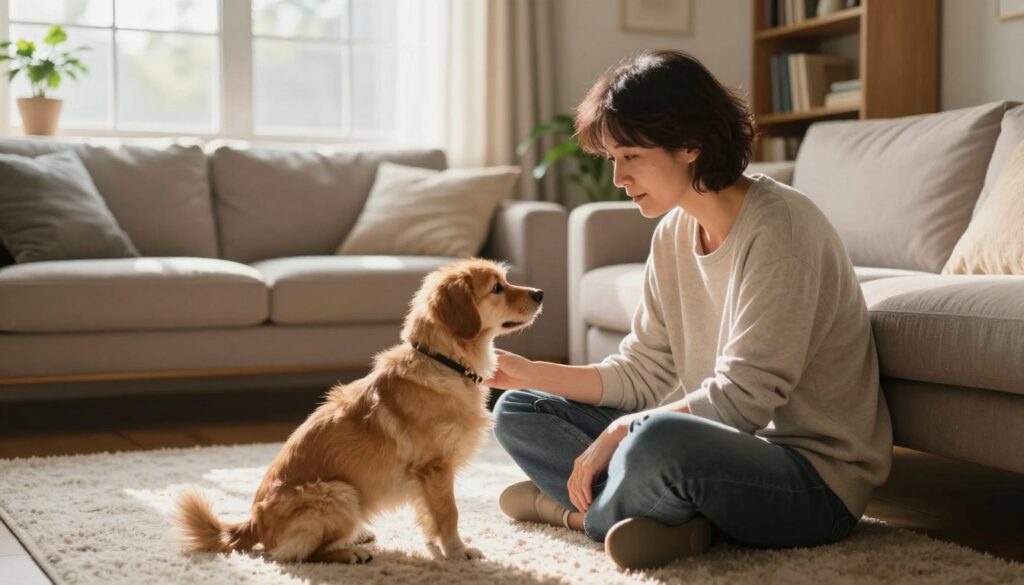
The Power of Presence and Attention
Being present and attentive is crucial in any relationship. When we give our pets our undivided attention, they feel seen and understood. This power of presence is equally important in human interactions, where it can significantly enhance emotional intelligence.
Strengthening Human Connections Through Better Observation
By observing and understanding the emotional states of those around us, we can respond in more empathetic and supportive ways. This not only strengthens our relationships but also contributes to a more compassionate community.
Teaching Children to Read Emotional Cues
Teaching children to recognize and understand emotional cues is an invaluable life skill. By starting with how pets communicate emotions, we can help children develop their emotional intelligence, leading to healthier relationships throughout their lives.
As we continue to learn from our pets, we realize that emotional intelligence is key to building strong, meaningful relationships. By applying these pet parenting lessons, we can become more empathetic and understanding individuals.
Responsibility and Care: The Foundation of Meaningful Relationships
When we take on the responsibility of caring for a pet, we’re not just changing their life; we’re also changing our own. The daily practice of putting others first is a fundamental aspect of pet care, teaching us the value of selflessness and compassion. By prioritizing our pets’ needs, we develop a sense of responsibility that extends beyond our relationships with them.
The Daily Practice of Putting Others First
Caring for a pet requires a commitment to their well-being, often putting their needs before our own. This selflessness is a valuable lesson in the importance of prioritizing others, a skill that can be applied to various aspects of our lives. As we provide for our pets, we learn to be more empathetic and understanding towards others.
Finding Joy in Caregiving
The act of caregiving is not just about responsibility; it’s also a source of joy. Many pet owners find that caring for their pets brings them a sense of purpose and fulfillment. As one pet owner noted, “Caring for my dog has taught me the value of living in the moment and appreciating the simple things in life.” This sentiment is echoed in
“The love for all living creatures is the most noble attribute of man.” – Charles Darwin
Teaching Children Responsibility Through Pet Care
Involving children in pet care can be a valuable teaching tool, helping them develop a sense of responsibility and empathy. By assigning tasks such as feeding or walking the pet, children learn the importance of contributing to the well-being of another living being. This lesson can be reinforced through participation in puppy raising classes, where children can learn alongside their parents.
How Caregiving Shapes Neural Pathways
Research has shown that caregiving can have a positive impact on our brain development, shaping neural pathways associated with empathy and compassion. By engaging in acts of care and kindness, we can rewire our brains to be more responsive to the needs of others. This is particularly relevant in the context of pet ownership advice, which often emphasizes the importance of creating a nurturing environment for our pets.
| Caregiving Activities | Benefits |
|---|---|
| Feeding and Nutrition | Teaches responsibility and empathy |
| Grooming and Hygiene | Fosters bonding and trust |
| Exercise and Play | Promotes physical and mental well-being |
Living in the Present: Mindfulness Wisdom From Our Pets
Our pets have a unique ability to live in the moment, teaching us valuable lessons about mindfulness. By observing how they engage with their surroundings, we can learn to appreciate the simple joys in life.
The Art of Being Fully Present
Pets show us that being fully present means letting go of distractions and focusing on the current moment. Whether it’s watching a bird outside or enjoying a belly rub, pets demonstrate how to be fully engaged in the present.
Finding Joy in Simple Moments
Pets find happiness in the simplest things, like a walk or a play session. This ability to find joy in everyday moments is a key aspect of mindfulness.
Practicing Pet-Inspired Mindfulness in Daily Life
To incorporate mindfulness into daily life, try to focus on one task at a time, just like your pet. For example, when eating, pay attention to the taste, texture, and smell of your food.
Reducing Anxiety Through Present-Moment Awareness
By practicing mindfulness, we can reduce anxiety by focusing on the present moment rather than worrying about the past or future. Pets can teach us that the present moment is all we truly have.
| Mindfulness Practice | Pet Inspiration | Benefit |
|---|---|---|
| Focus on one task | Watching a pet eat or play | Reduced distraction |
| Appreciate simple joys | Seeing a pet enjoy a simple activity | Increased happiness |
| Practice present-moment awareness | Observing a pet’s engagement with its surroundings | Reduced anxiety |
Forgiveness and Moving Forward: Lessons in Emotional Resilience
The way pets forgive and forget past hurts can teach us valuable lessons about emotional resilience in our own lives. Pets have an incredible capacity to let go of negative experiences, which allows them to live in the present and form strong bonds with their human caregivers.
How Pets Let Go of Past Hurts
Pets, especially dogs, are known for their ability to forgive and forget. Whether they’ve experienced trauma or simply had a bad day, they can quickly move on from negative experiences. This is largely due to their lack of rumination and ability to live in the moment. By observing this behavior, we can learn to let go of our own past hurts and cultivate a more forgiving nature.
The Freedom of Forgiveness
Forgiveness is a powerful tool that can free us from the burdens of past hurts and resentments. By embracing forgiveness, we can create a more positive and resilient mindset, which is essential for building strong, healthy relationships. This is particularly relevant in the context of canine behavior therapy, where forgiveness and understanding are key to helping dogs overcome behavioral issues.
Building Emotional Resilience in Human Relationships
Emotional resilience is crucial in human relationships, as it allows us to navigate challenges and conflicts with greater ease. By learning from our pets’ ability to forgive and forget, we can develop more resilient relationships. Here are some strategies for building emotional resilience:
| Strategy | Description |
|---|---|
| Practice Forgiveness | Let go of grudges and resentments to create a more positive relationship dynamic. |
| Cultivate Mindfulness | Focus on the present moment to reduce rumination and increase emotional well-being. |
| Develop Empathy | Understand and appreciate the perspectives of others to foster deeper connections. |
Teaching Children the Power of Second Chances
Teaching children about forgiveness and second chances is an invaluable life lesson. By instilling these values, we can help them develop emotional resilience and form healthy relationships throughout their lives. Encourage children to reflect on their own experiences and consider how forgiveness can positively impact their lives.
Boundaries and Respect: Creating Healthy Relationship Dynamics
The key to healthy dynamics in relationships, whether with pets or people, lies in setting clear boundaries. Establishing boundaries is not about creating distance, but about fostering an environment of respect and understanding.
Establishing Clear Limits
Setting boundaries is crucial for both pets and humans. For pets, clear boundaries provide a sense of security and help them understand what is expected of them. For humans, boundaries are essential in maintaining healthy relationships by defining what is and isn’t acceptable behavior.
Teaching Respect Through Consistency
Consistency is key when teaching respect through boundaries. By consistently enforcing limits, we teach our pets and ourselves the importance of respecting others’ needs and personal space.
Healthy Boundary-Setting in Human Relationships
In human relationships, healthy boundary-setting involves communicating our needs clearly and being respectful of others’ boundaries. It’s about finding a balance between being open and maintaining our individuality.
Balancing Love with Structure
“Love is not enough; we must also provide structure.” This quote resonates deeply when considering pet care and human relationships. Love and affection are vital, but they must be balanced with structure and boundaries to create a nurturing environment.
By understanding and implementing these principles, we can create healthier, more respectful relationships with both our pets and the people around us.
Conclusion: Becoming Better Humans Through Pet Parenting
As we’ve explored throughout this article, the lessons we learn from pet parenting can have a profound impact on our human growth. By embracing the responsibilities and joys of caring for our pets, we develop essential life skills that benefit us in many ways.
The bond we form with our pets teaches us about unconditional love, trust, and communication. These pet parenting lessons can be applied to our relationships with others, helping us become more empathetic, patient, and understanding individuals.
By recognizing the value of these lessons, we can foster a deeper connection with both our pets and the people around us. As we continue to grow and learn from our furry friends, we become better humans, equipped with the skills and compassion needed to navigate life’s challenges.